
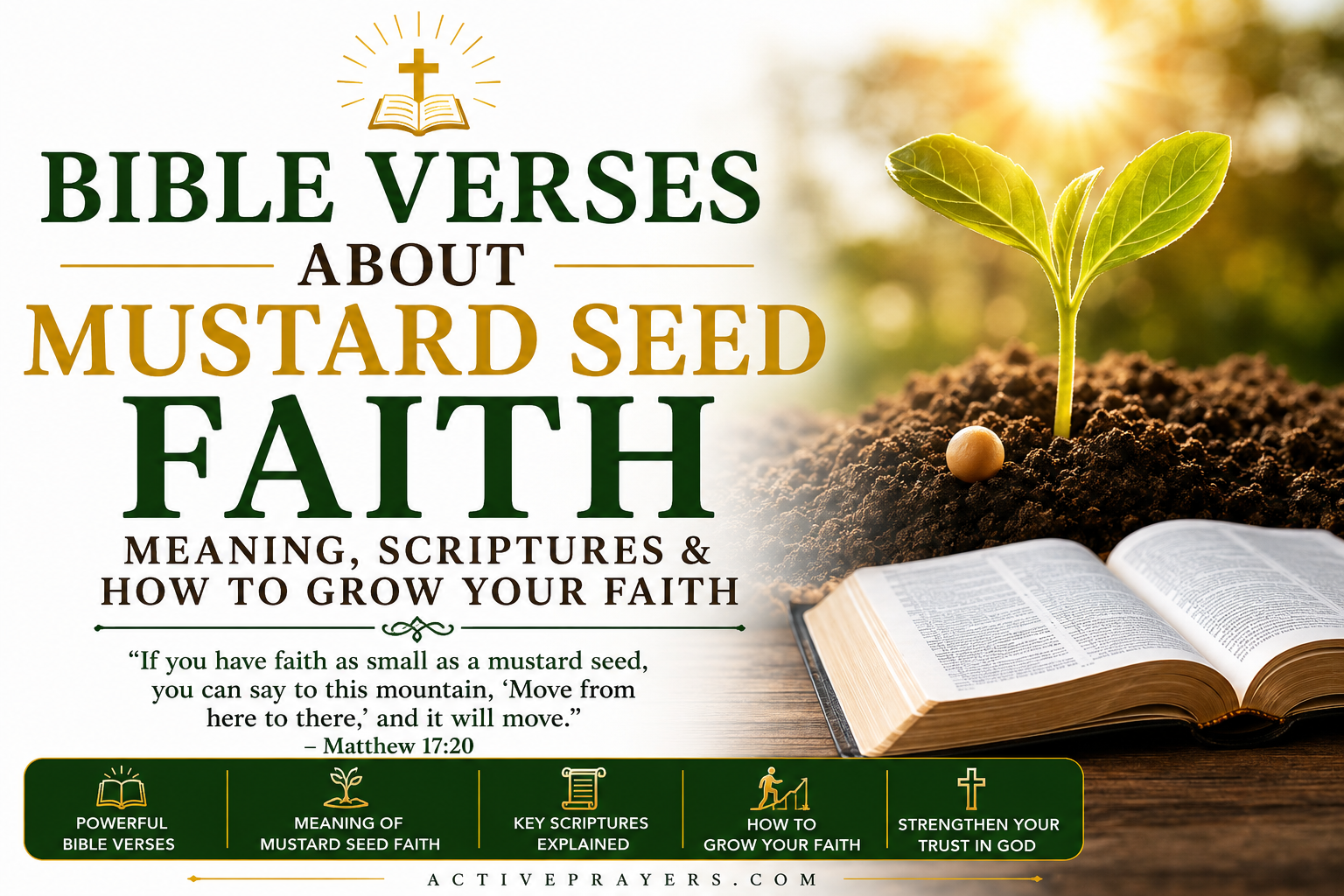
What Is Mustard Seed Faith?
Faith is one of the central themes of the Christian life. Throughout the Bible, believers are encouraged to trust God wholeheartedly, even when circumstances seem impossible. Among Jesus’ many teachings about faith, one of the most memorable is His comparison of faith to a mustard seed. Though the mustard seed is incredibly small, Jesus used it to illustrate a profound spiritual truth: God can accomplish extraordinary things through even the smallest genuine faith placed in Him.
Many people misunderstand what Jesus meant by “mustard seed faith.” Some assume He was teaching that believers can achieve anything simply by believing hard enough. Others think they must possess a large amount of faith before God will answer their prayers. However, Scripture presents a different picture. Jesus’ emphasis was not on the quantity of faith but on the object of faith. Even faith as small as a mustard seed becomes powerful when it is placed in the all-powerful God.
The image of the mustard seed appears several times in the Gospels. Jesus used it to teach about trusting God, overcoming impossibilities, and the remarkable growth of God’s kingdom. Although tiny, the mustard seed grows into a large plant, illustrating how God often begins His work in small, humble ways before producing significant results. This lesson continues to encourage believers today, reminding them that God delights in working through what the world considers small or insignificant.
Throughout Scripture, we see countless examples of ordinary men and women who exercised what could be described as mustard seed faith. Noah built an ark before rain had ever fallen. Abraham left his homeland without knowing his destination. David confronted Goliath with confidence in God’s power rather than his own strength. The woman with the issue of blood reached out to touch Jesus’ garment, believing He could heal her. None of these individuals had perfect faith, yet they trusted a perfect God who honored their dependence on Him.
The Bible also acknowledges that believers sometimes struggle with doubt. Even Jesus’ disciples asked Him, “Increase our faith.” A desperate father once cried out to Jesus, “I believe; help my unbelief!” These passages remind us that faith does not require perfection. God graciously meets His people where they are and strengthens those who sincerely seek Him.
Studying Bible verses about mustard seed faith helps Christians develop a biblical understanding of trust, perseverance, and dependence on God. It teaches that genuine faith is not measured by its size but by its willingness to rely on God’s promises. As believers grow in their relationship with Christ, their faith matures through prayer, obedience, the study of Scripture, and the work of the Holy Spirit.
In this comprehensive guide, you will discover what the Bible says about mustard seed faith, the meaning behind Jesus’ illustration, powerful Bible verses that encourage unwavering trust, examples of faith in action, practical ways to grow your faith, and answers to common questions about this important biblical teaching.
Whether your faith feels strong today or as small as a mustard seed, remember this encouraging truth: God is able to do immeasurably more than we can ask or imagine. The strength of your faith is found not in yourself but in the greatness of the God you trust. As you place your confidence in Him, He will faithfully lead, strengthen, and sustain you through every season of life.
Why Mustard Seed Faith Matters
Every believer experiences moments when faith is tested. Illness, financial hardship, unanswered prayers, family struggles, and uncertainty about the future can cause even mature Christians to wrestle with doubt. During these times, Jesus’ teaching about mustard seed faith offers both comfort and encouragement.
Mustard seed faith reminds us that God does not require extraordinary people to accomplish extraordinary things. Throughout the Bible, He consistently worked through ordinary men and women who trusted Him despite their weaknesses. Moses doubted his ability to speak, Gideon questioned God’s calling, and Peter struggled with fear, yet God accomplished His purposes through each of them because they learned to depend on Him rather than themselves.
This teaching also guards believers from two common errors. The first is discouragement—the belief that our faith is too small for God to use. The second is pride—the idea that spiritual success depends on the greatness of our own faith. Jesus corrects both misunderstandings by directing our attention away from ourselves and toward God’s limitless power.
Mustard seed faith encourages believers to take the next step of obedience, even when they cannot see the entire path ahead. It teaches us to trust God’s promises, rely on His strength, and leave the results in His hands. As we faithfully walk with Christ day by day, our faith grows deeper, stronger, and more mature.
The message of mustard seed faith remains just as relevant today as it was when Jesus first spoke these words. In a world marked by fear, uncertainty, and self-reliance, believers are called to place their confidence in the God for whom nothing is impossible. Even the smallest genuine faith, when placed in Him, can become the beginning of a life transformed by His grace and power.
What Does the Bible Say About Mustard Seed Faith?
The phrase “mustard seed faith” comes directly from the teachings of Jesus Christ. It is one of the Bible’s most memorable illustrations because it uses something very small to communicate a powerful spiritual truth. Although a mustard seed is tiny, Jesus explained that even faith as small as this seed can accomplish what seems impossible when it is placed in God.
Many Christians have heard the expression, but it is often misunderstood. Some believe Jesus was teaching that believers simply need to believe harder to receive whatever they desire. Others assume that God measures faith by quantity, requiring a certain “amount” before He responds. A careful reading of Scripture shows that Jesus’ emphasis was different. He pointed His followers away from self-confidence and toward complete dependence on God’s limitless power.
Where Does Jesus Talk About Mustard Seed Faith?
The teaching appears in several places in the New Testament, each emphasizing a different aspect of faith.
Matthew 17:20
After the disciples were unable to cast out a demon, Jesus explained that their failure was connected to their lack of faith. He then said:
“For truly I tell you, if you have faith the size of a mustard seed, you will tell this mountain, ‘Move from here to there,’ and it will move. Nothing will be impossible for you.” (Matthew 17:20)
Jesus was not encouraging believers to literally move mountains by the force of positive thinking. Throughout Scripture, mountains often symbolize overwhelming obstacles or impossible situations. His point was that God can accomplish what seems impossible through those who trust Him.
Luke 17:5–6
The apostles once asked Jesus, “Increase our faith.” His response surprised them.
Instead of telling them they needed larger faith, Jesus replied that faith as small as a mustard seed could uproot a mulberry tree and plant it in the sea.
This teaches that effective faith is not primarily about its size but about trusting the all-powerful God. Even small, sincere faith can produce extraordinary results because God’s power—not human faith—is what accomplishes the impossible.
Matthew 13:31–32
Jesus also used the mustard seed in one of His Kingdom parables.
He compared the Kingdom of Heaven to a mustard seed that begins as one of the smallest seeds but grows into a large garden plant where birds can find shelter.
Although this passage focuses on the growth of God’s kingdom rather than personal faith, it reinforces an important biblical principle: God often begins with small and seemingly insignificant things before producing remarkable results.
What Is the Meaning of Mustard Seed Faith?
Mustard seed faith means placing genuine trust in God, even when your faith feels small.
Jesus did not say believers need perfect faith.
He did not say they need enormous faith.
Instead, He taught that sincere faith—even if it appears small—becomes powerful because it rests upon an infinitely powerful God.
This truth encourages every believer.
You do not need to have every question answered before trusting God.
You do not need to eliminate every doubt before approaching Him in prayer.
You simply need to place your confidence in His promises and remain willing to follow Him.
Mustard Seed Faith Is About Quality, Not Quantity
One of the biggest misconceptions is that God responds only when believers accumulate enough faith.
Scripture consistently teaches the opposite.
A small amount of genuine faith is far more valuable than outward confidence that lacks sincere trust in God.
Throughout the Bible, God honored imperfect people who depended on Him:
- Noah obeyed despite never having seen a worldwide flood.
- Abraham left his homeland without knowing where God was leading him.
- David faced Goliath armed only with confidence in the Lord.
- Peter stepped out of the boat to walk toward Jesus, even though fear later caused him to sink.
- The woman suffering from chronic bleeding believed Jesus could heal her with just one touch.
None of these individuals demonstrated flawless faith.
Yet God worked powerfully through them because they trusted Him.
Does Mustard Seed Faith Mean Christians Will Never Doubt?
No.
The Bible honestly records that even faithful believers experienced seasons of doubt and uncertainty.
John the Baptist questioned while imprisoned.
Thomas struggled to believe the resurrection until he saw Jesus.
The father of a demon-possessed boy prayed one of Scripture’s most honest prayers:
“I believe; help my unbelief!” (Mark 9:24)
Rather than rejecting him, Jesus responded with compassion.
This reminds believers that faith and honest dependence can exist alongside moments of weakness.
God invites His children to bring both their faith and their doubts to Him.
What Can Mustard Seed Faith Accomplish?
Faith itself has no supernatural power apart from God.
Instead, faith connects believers to the One who possesses all power and authority.
Through faith, God enables His people to:
- Trust Him during difficult seasons.
- Overcome fear and anxiety.
- Persevere through suffering.
- Obey His calling even when the future is uncertain.
- Experience His peace and guidance.
- Witness His work in ways that bring Him glory.
The focus is always God’s ability—not ours.
The Central Lesson of Mustard Seed Faith
Jesus’ teaching about the mustard seed continues to encourage Christians today.
No believer should become discouraged because their faith feels small.
What matters most is not the size of your faith but the greatness of the God in whom you place it.
Even a tiny seed grows because it contains life.
Likewise, genuine faith grows as believers spend time in God’s Word, seek Him in prayer, obey His commands, and depend on the Holy Spirit.
As your relationship with Christ deepens, your faith matures—not because you become stronger on your own, but because you learn to trust Him more completely.
That is the heart of mustard seed faith: humble, genuine trust in an all-powerful and faithful God who delights in accomplishing great things through those who depend on Him.
The Meaning of Mustard Seed Faith
To fully understand mustard seed faith, it is important to look beyond the size of the seed and focus on why Jesus chose it as His illustration. In the ancient world, the mustard seed was commonly recognized as one of the smallest seeds planted by farmers. Although tiny, it grew into a remarkably large plant compared to its humble beginning. Jesus used this familiar image to teach a timeless lesson about faith, God’s kingdom, and the power of trusting Him.
The meaning of mustard seed faith is not that believers must generate extraordinary faith through their own efforts. Instead, Jesus taught that even the smallest amount of genuine faith can be used by God to accomplish His purposes. The power is never in the faith itself but in the God who responds to faith.
Faith Is Only as Strong as Its Object
One of the most important biblical principles is that faith is valuable because of the One in whom it is placed.
Imagine two people crossing a bridge. One crosses with complete confidence while the other walks across with trembling fear. If the bridge is strong, both arrive safely because the bridge—not their confidence—supports them.
The same principle applies to the Christian life.
Our confidence rests in God’s strength, wisdom, and faithfulness rather than in the intensity of our own belief. Even weak faith directed toward a faithful God is stronger than great confidence placed in something unreliable.
This truth removes the pressure to have “perfect faith.” Instead, it encourages believers to keep their eyes fixed on the Lord, who is perfectly trustworthy.
Mustard Seed Faith Begins Small
Every Christian begins with small faith.
The disciples did not become mature believers overnight.
Abraham’s faith developed over many years.
Peter often struggled with fear before becoming a bold preacher of the gospel.
Growth is a normal part of the Christian life.
Just as a mustard seed slowly develops into a mature plant, faith grows through daily dependence on God. Spiritual maturity is rarely instant. It develops as believers study Scripture, pray consistently, obey God’s Word, and experience His faithfulness through life’s challenges.
Small beginnings should never discourage us because God often delights in working through them.
Mustard Seed Faith Is Living Faith
A mustard seed is alive.
Although it appears small and insignificant, it contains the potential for growth. In the same way, genuine faith is living and active. It produces spiritual fruit as believers continue to trust and obey God.
The Bible teaches that authentic faith naturally expresses itself through obedience.
James writes that faith without works is dead—not because good works save us, but because living faith always produces a changed life. Obedience is the evidence of genuine trust in God.
Mustard seed faith may begin quietly, but it does not remain inactive. It continues growing as believers walk faithfully with Christ.
Mustard Seed Faith Requires Trust
Trust is at the heart of biblical faith.
Throughout Scripture, God repeatedly called His people to trust Him even when they could not see the outcome.
- Noah built the ark before rain came.
- Abraham left his homeland without knowing his destination.
- Moses confronted Pharaoh despite his fears.
- Joshua marched around Jericho before the walls fell.
- The disciples left everything to follow Jesus.
None of these acts made sense from a purely human perspective.
Each required trusting God’s promises above visible circumstances.
Mustard seed faith believes that God is faithful even when His plans are not fully understood.
Mustard Seed Faith Grows Through Testing
Many believers wish their faith would grow without difficulties, but Scripture teaches that trials often strengthen faith.
James encourages Christians to consider trials as opportunities for spiritual growth because testing produces perseverance and maturity.
Likewise, Peter explains that tested faith is more precious than gold because it results in praise, honor, and glory when Christ returns.
Every challenge becomes an opportunity to trust God more deeply.
Instead of destroying faith, God often uses difficulties to strengthen it.
Mustard Seed Faith Is Rooted in God’s Word
Faith does not grow through emotions alone.
It grows by hearing and believing God’s Word.
Romans 10:17 teaches that faith comes from hearing the message of Christ. As believers regularly study Scripture, they learn more about God’s character, His promises, and His faithfulness throughout history.
The more we know God, the more confidently we trust Him.
This is why daily Bible reading is essential for spiritual growth.
God strengthens faith by revealing Himself through His Word.
Mustard Seed Faith Looks Beyond Circumstances
One of the greatest characteristics of biblical faith is its ability to see beyond present circumstances.
When David faced Goliath, everyone else saw a giant.
David saw the greatness of God.
When the disciples feared the storm, Jesus demonstrated His authority over creation.
When Martha mourned Lazarus’ death, Jesus reminded her that He is the resurrection and the life.
Faith does not ignore reality.
Rather, it acknowledges reality while believing that God is greater than every obstacle.
The Heart of Mustard Seed Faith
Ultimately, mustard seed faith is about complete dependence on God.
It is humble enough to admit weakness.
It is courageous enough to obey despite uncertainty.
It is patient enough to wait for God’s timing.
It is confident enough to believe that God’s promises are true.
Most importantly, mustard seed faith keeps its eyes fixed on Jesus Christ—the Author and Perfecter of our faith. As believers walk with Him day by day, their faith becomes stronger, their trust grows deeper, and their lives increasingly reflect His grace and power.
The lesson Jesus taught is as relevant today as it was two thousand years ago: never underestimate what God can do through even the smallest genuine faith placed completely in Him.
Why Did Jesus Compare Faith to a Mustard Seed?
Jesus was a master teacher who often used familiar objects from everyday life to communicate profound spiritual truths. Farmers, shepherds, fishermen, seeds, vineyards, and lamps frequently appeared in His teachings because His listeners could easily understand these illustrations. Among them, the mustard seed became one of His most memorable examples of faith.
At first glance, comparing faith to a tiny seed may seem unusual. Why not compare faith to a mighty tree, a towering mountain, or a powerful river? The answer lies in what the mustard seed represented. Jesus wanted His followers to understand that God often works through what appears small, weak, and insignificant by human standards.
The Mustard Seed Was Extremely Small
In first-century Palestine, the mustard seed was widely recognized for its tiny size. Although it was one of the smallest seeds commonly planted by farmers, it produced a large garden plant that could grow several feet tall and provide shelter for birds.
Jesus intentionally chose this familiar example to emphasize that greatness often begins with small beginnings.
The lesson was clear: never underestimate what God can do through sincere faith, no matter how small it may seem.
Jesus Wanted to Shift the Focus from Quantity to Trust
One of the most common misunderstandings about faith is the belief that God responds only when people possess a large amount of it.
Jesus challenged this way of thinking.
When the disciples struggled with their faith, He did not tell them to accumulate more faith before God could work. Instead, He explained that faith as small as a mustard seed was enough because the power belongs to God, not to the believer.
This truth is incredibly freeing.
Many Christians worry that their faith is not strong enough, but Jesus reminds us that genuine trust—even when it feels weak—is valuable because it rests in an all-powerful Savior.
Small Beginnings Often Lead to Great Results
Throughout the Bible, God consistently chooses small beginnings to accomplish extraordinary purposes.
- He chose Abraham, an elderly man without children, to become the father of many nations.
- He selected Moses, who felt inadequate, to lead Israel out of Egypt.
- He called David, the youngest son in his family, to become Israel’s greatest king.
- He chose ordinary fishermen to become apostles who would spread the gospel throughout the world.
- He sent His Son to be born in a humble manger rather than a royal palace.
These examples reveal a consistent biblical pattern: God’s power is displayed most clearly when human strength is insufficient.
The mustard seed perfectly illustrates this principle.
Faith Is Meant to Grow
A mustard seed does not remain a seed forever.
Once planted, it begins growing.
Likewise, Christian faith is never intended to remain stagnant.
When believers spend time in God’s Word, pray faithfully, obey His commands, and experience His faithfulness, their trust gradually becomes stronger and more mature.
Growth may not always be obvious from one day to the next, but over time, a believer’s faith becomes increasingly evident through perseverance, obedience, and spiritual fruit.
Jesus’ illustration reminds us that faith is alive.
Living faith continues to grow.
God Values Humility
Another reason Jesus used a tiny seed is that it reflects humility.
The world often celebrates greatness, power, and self-confidence.
God values humble dependence.
Mustard seed faith acknowledges that we cannot save ourselves, control every circumstance, or accomplish God’s purposes through our own strength.
Instead, it confesses complete dependence upon the Lord.
James teaches that God opposes the proud but gives grace to the humble.
Mustard seed faith is humble faith.
It recognizes that every victory belongs to God.
Faith Overcomes Human Limitations
When Jesus spoke about moving mountains, His audience understood that mountains represented overwhelming obstacles.
Humanly speaking, mountains cannot be moved.
But what is impossible for people is possible with God.
This does not mean believers receive unlimited power to accomplish whatever they desire. Rather, it means that no obstacle can prevent God from fulfilling His purposes when His people trust and obey Him.
Again, the emphasis is on God’s limitless ability rather than human achievement.
The Mustard Seed Illustrates God’s Kingdom
Jesus also used the mustard seed to describe the Kingdom of Heaven.
The kingdom began with a small group of disciples following an apparently ordinary carpenter from Nazareth.
To many observers, it appeared insignificant.
Yet through God’s power, the gospel spread across nations, transforming millions of lives throughout history.
This reminds believers that God’s work often begins quietly before producing results beyond anything we could imagine.
Small acts of faith, obedience, prayer, and evangelism can have eternal impact because God multiplies faithful obedience.
What This Means for Christians Today
Jesus’ comparison continues to encourage believers in every generation.
Perhaps your faith feels weak.
Perhaps your prayers seem unanswered.
Perhaps your circumstances appear impossible.
The lesson of the mustard seed remains unchanged.
God does not ask you to manufacture extraordinary faith.
He asks you to trust Him.
Bring Him the faith you have today, however small it may seem.
Read His Word.
Pray consistently.
Obey His commands.
Walk faithfully one step at a time.
As you do, your faith will grow because the God who planted it is faithful to nurture it.
The Timeless Lesson
Jesus compared faith to a mustard seed because it perfectly illustrates how God’s power works through humble, genuine trust.
Small faith in a great God is far more powerful than great confidence in human ability.
The mustard seed teaches that faith grows over time, produces lasting fruit, and accomplishes God’s purposes because He is the One who gives it life.
Whenever you feel discouraged about the size of your faith, remember Jesus’ illustration. The Lord delights in using ordinary people with humble hearts to accomplish extraordinary things for His glory. Your faith does not have to be perfect—it simply needs to be placed in the perfect Savior who is always faithful to keep His promises.
Characteristics of Mustard Seed Faith
Jesus’ illustration of the mustard seed teaches that genuine faith is not measured by outward appearance but by its trust in God. Throughout the Bible, we see certain qualities consistently present in the lives of men and women who walked by faith. These characteristics reveal what mustard seed faith looks like in everyday life and how believers can cultivate a deeper relationship with the Lord.
1. Mustard Seed Faith Trusts God Completely
At its core, biblical faith is complete confidence in God’s character. It believes that God is good, faithful, wise, and sovereign even when circumstances are difficult to understand.
Abraham demonstrated this kind of trust when God called him to leave his homeland without revealing his final destination. Although he did not know where he was going, he trusted the One who was leading him.
Likewise, Christians are called to trust God’s promises even when they cannot see the entire path ahead.
Key Scripture: Proverbs 3:5–6
2. Mustard Seed Faith Begins Small but Continues to Grow
No believer begins with perfect faith. Spiritual growth is a lifelong journey.
Just as a mustard seed slowly grows into a mature plant, faith develops through daily obedience, prayer, worship, and the study of God’s Word. Every trial, answered prayer, and lesson learned strengthens a believer’s confidence in God’s faithfulness.
Small faith should never be despised because God often uses humble beginnings to accomplish great purposes.
Key Scripture: Matthew 13:31–32
3. Mustard Seed Faith Obeys God
True faith always produces obedience.
When Noah built the ark, his actions demonstrated his trust in God’s warning. When Peter stepped out of the boat to walk toward Jesus, his faith led him to act despite the storm.
Obedience is not the cause of salvation—it is the evidence of genuine faith. Christians who trust God will increasingly desire to follow His commands, even when doing so requires sacrifice.
Key Scripture: James 2:17
4. Mustard Seed Faith Perseveres Through Trials
Faith is often strengthened through hardship.
The Bible teaches that trials refine believers just as fire refines gold. Difficult seasons reveal whether our confidence rests in changing circumstances or in God’s unchanging character.
Joseph remained faithful despite betrayal and imprisonment. Job continued trusting God through unimaginable suffering. Their perseverance became powerful testimonies of unwavering faith.
Mustard seed faith does not give up when life becomes difficult. It continues trusting God, believing that He is working even when His plans cannot yet be seen.
Key Scripture: James 1:2–4
5. Mustard Seed Faith Depends on God’s Strength
Biblical faith does not rely on human ability.
Many of God’s servants recognized their own weaknesses. Moses felt inadequate to speak before Pharaoh. Gideon doubted his qualifications to lead Israel. Paul admitted his weaknesses and learned that God’s power is made perfect in them.
Mustard seed faith humbly acknowledges that apart from God, we can do nothing. It relies on His strength instead of personal confidence.
Key Scripture: 2 Corinthians 12:9
6. Mustard Seed Faith Is Rooted in God’s Word
Faith grows through hearing and believing God’s Word.
The more believers understand God’s character and promises, the more confidently they trust Him. Scripture provides wisdom for decisions, encouragement during hardship, and assurance of God’s faithfulness.
A Christian who consistently studies the Bible develops a stronger foundation for faith than one who relies only on emotions or circumstances.
Key Scripture: Romans 10:17
7. Mustard Seed Faith Prays with Confidence
Prayer is one of the clearest expressions of faith.
When believers pray, they acknowledge their dependence upon God and trust Him to work according to His perfect will. Faith-filled prayer is not about demanding specific outcomes but about confidently placing every concern into the Father’s hands.
Jesus frequently encouraged His followers to pray persistently and believe that God hears His children.
Key Scripture: Philippians 4:6–7
8. Mustard Seed Faith Remains Humble
Pride places confidence in human ability.
Faith places confidence in God.
Jesus consistently praised humble individuals who recognized their need for His mercy. The tax collector who prayed for forgiveness, the centurion who trusted Christ’s authority, and the widow who gave sacrificially all demonstrated humble dependence upon the Lord.
Mustard seed faith understands that every blessing, victory, and answer to prayer comes by God’s grace.
Key Scripture: James 4:6
9. Mustard Seed Faith Produces Spiritual Fruit
Living faith changes the way believers think, speak, and live.
As faith matures, it produces the fruit of the Spirit, including love, joy, peace, patience, kindness, goodness, faithfulness, gentleness, and self-control. These qualities become evidence that God’s work is transforming the believer from the inside out.
Faith is not merely intellectual agreement with biblical truths. It is a living relationship with Christ that influences every area of life.
Key Scripture: Galatians 5:22–23
10. Mustard Seed Faith Keeps Its Eyes on Jesus
The greatest characteristic of mustard seed faith is its focus on Christ.
The Christian life is not sustained by self-confidence but by continually looking to Jesus, the Author and Perfecter of our faith. He is the perfect example of obedience, trust, and perseverance, and He faithfully strengthens those who follow Him.
When Peter looked at the storm, he began to sink. When he looked to Jesus, he found safety. The same principle applies to believers today. Faith grows strongest when our attention is fixed on the Savior rather than our circumstances.
Key Scripture: Hebrews 12:2
Living Out Mustard Seed Faith
These characteristics remind us that mustard seed faith is not about possessing extraordinary spiritual strength. It is about daily dependence on an extraordinary God. Genuine faith trusts His promises, obeys His Word, perseveres through trials, and continues growing throughout life’s journey.
If your faith feels small today, take heart. God does not ask for flawless faith—He asks for faithful trust. As you walk with Him each day, He will nurture your faith, strengthen your heart, and use your life for His glory. The smallest seed, when planted in fertile soil, can grow into something remarkable. In the same way, God can use even the smallest genuine faith to accomplish His perfect purposes.
Powerful Bible Verses About Mustard Seed Faith (With Meaning)
The Bible contains many passages that teach about faith, trust, perseverance, and God’s power. While only a few verses specifically mention the mustard seed, dozens of Scriptures expand on the same biblical principles that Jesus taught. These verses remind believers that faith grows through knowing God, trusting His promises, obeying His Word, and depending on His strength rather than our own.
Below are some of the most encouraging Bible verses about mustard seed faith, along with brief explanations to help you understand and apply each passage.
1. Matthew 17:20
“He replied, ‘Because you have so little faith. Truly I tell you, if you have faith as small as a mustard seed, you can say to this mountain, “Move from here to there,” and it will move. Nothing will be impossible for you.'”
Meaning
This is the most well-known passage about mustard seed faith. Jesus was teaching His disciples that the effectiveness of faith is not determined by its size but by the greatness of God. Mountains represent obstacles that seem impossible from a human perspective. Through faith, believers learn to depend on God’s limitless power rather than their own abilities.
Key Lesson: Small faith in a great God can overcome impossible situations according to His will.
2. Luke 17:5–6
“The apostles said to the Lord, ‘Increase our faith!’ He replied, ‘If you have faith as small as a mustard seed, you can say to this mulberry tree, “Be uprooted and planted in the sea,” and it will obey you.'”
Meaning
The disciples wanted greater faith, but Jesus redirected their attention. Rather than focusing on the amount of faith they possessed, He emphasized genuine trust in God. Even the smallest authentic faith can accomplish God’s purposes because His power—not ours—is at work.
Key Lesson: God values sincere trust more than impressive displays of confidence.
3. Matthew 13:31–32
“The kingdom of heaven is like a mustard seed, which a man took and planted in his field. Though it is the smallest of all seeds, yet when it grows, it is the largest of garden plants and becomes a tree…”
Meaning
Although this parable primarily describes the growth of God’s kingdom, it also illustrates an important principle of faith. God often begins His work through small and seemingly insignificant beginnings before producing remarkable results.
Key Lesson: Never underestimate what God can accomplish through humble beginnings.
4. Hebrews 11:1
“Now faith is confidence in what we hope for and assurance about what we do not see.”
Meaning
Faith is trusting God’s promises even when they are not yet visible. It rests upon God’s character instead of circumstances. Mustard seed faith continues believing because it knows God is faithful.
Key Lesson: Faith looks beyond present circumstances to God’s eternal promises.
5. Hebrews 11:6
“And without faith it is impossible to please God, because anyone who comes to him must believe that he exists and that he rewards those who earnestly seek him.”
Meaning
Faith is essential to a relationship with God. Every believer approaches Him by trusting His character, believing His Word, and seeking Him wholeheartedly.
Key Lesson: Faith is the foundation of a life that honors God.
6. Romans 10:17
“Consequently, faith comes from hearing the message, and the message is heard through the word about Christ.”
Meaning
Faith grows through God’s Word. The more believers study Scripture, the deeper their understanding of God’s promises becomes, leading to greater confidence in Him.
Key Lesson: Regular Bible study strengthens and nourishes your faith.
7. Proverbs 3:5–6
“Trust in the Lord with all your heart and lean not on your own understanding; in all your ways submit to him, and he will make your paths straight.”
Meaning
Faith requires surrendering our limited understanding to God’s perfect wisdom. Even when life seems confusing, believers can trust Him to direct their steps.
Key Lesson: Trust God’s wisdom more than your own reasoning.
8. Mark 9:23–24
“‘Everything is possible for one who believes.’ Immediately the boy’s father exclaimed, ‘I do believe; help me overcome my unbelief!'”
Meaning
This passage beautifully demonstrates that genuine faith can exist alongside honest struggles. Jesus did not reject the father’s imperfect faith. Instead, He responded with compassion and power.
Key Lesson: Bring both your faith and your doubts to Jesus.
9. James 1:2–4
“Consider it pure joy, my brothers and sisters, whenever you face trials of many kinds, because you know that the testing of your faith produces perseverance”.
Meaning
Trials are one of God’s primary tools for strengthening faith. Difficult seasons reveal whether our confidence rests in circumstances or in the Lord. As believers persevere through testing, their faith becomes more mature, steadfast, and complete.
Key Lesson: God often uses hardships to strengthen and refine your faith.
10. 2 Corinthians 5:7
“For we live by faith, not by sight.”
Meaning
The Christian life is lived by trusting God’s promises rather than relying solely on what we can see. Faith enables believers to remain hopeful even when the future is uncertain because they know God is in control.
Key Lesson: Faith trusts God’s unseen work even when circumstances appear discouraging.
11. Isaiah 41:10
“So do not fear, for I am with you; do not be dismayed, for I am your God. I will strengthen you and help you; I will uphold you with my righteous right hand.”
Meaning
God’s presence is the foundation of our faith. When fear and uncertainty arise, believers can rely on His promise to strengthen, help, and sustain them through every trial.
Key Lesson: Faith grows when we remember that God is always with us.
12. Philippians 4:13
“I can do all things through Christ who strengthens me.”
Meaning
This verse is often misunderstood as a promise of unlimited personal success. In context, Paul teaches that Christ gives believers the strength to remain faithful in every circumstance—whether experiencing abundance or hardship.
Key Lesson: Faith depends on Christ’s strength, not personal ability.
13. Romans 8:28
“And we know that in all things God works for the good of those who love him, who have been called according to his purpose.”
Meaning
Faith trusts that God is actively working, even when His purposes are not immediately visible. Believers can rest in the assurance that God uses every circumstance to accomplish His perfect plan.
Key Lesson: God’s providence gives believers confidence during life’s uncertainties.
14. Joshua 1:9
“Have I not commanded you? Be strong and courageous. Do not be afraid; do not be discouraged, for the Lord your God will be with you wherever you go.”
Meaning
As Joshua prepared to lead Israel, God reminded him that courage comes from His presence rather than human strength. Faith enables believers to move forward confidently because God goes before them.
Key Lesson: Courage grows from trusting God’s constant presence.
15. Psalm 46:1
“God is our refuge and strength, an ever-present help in trouble.”
Meaning
Faith does not deny life’s difficulties. Instead, it confidently runs to God as a refuge during every trial. He remains present, faithful, and dependable regardless of changing circumstances.
Key Lesson: God is the believer’s safe refuge in every season of life.
16. Ephesians 3:20
“Now to him who is able to do immeasurably more than all we ask or imagine, according to his power that is at work within us.”
Meaning
God’s power far exceeds human expectations. Mustard seed faith believes that the Lord is able to accomplish far more than we can imagine, always according to His perfect will and for His glory.
Key Lesson: God’s ability is greater than our limitations.
17. Psalm 37:5
“Commit your way to the Lord; trust in him and he will act.”
Meaning
Faith involves surrendering every plan and concern to God. Instead of relying on personal control, believers place their future into His capable hands, trusting Him to accomplish His purposes.
Key Lesson: Trusting God means placing your future under His care.
18. John 11:40
“Then Jesus said, ‘Did I not tell you that if you believe, you will see the glory of God?'”
Meaning
Before raising Lazarus from the dead, Jesus reminded Martha that faith allows believers to witness God’s power and glory. Although God’s timing may differ from our expectations, He always remains faithful.
Key Lesson: Faith patiently waits to see God’s glory revealed.
19. 1 Peter 1:6–7
“These have come so that the proven genuineness of your faith—of greater worth than gold… may result in praise, glory and honor when Jesus Christ is revealed.”
Meaning
Peter explains that trials refine faith just as fire purifies gold. Difficult experiences are not signs of God’s absence but opportunities for spiritual growth and deeper dependence upon Him.
Key Lesson: Tested faith becomes stronger and more valuable.
20. Hebrews 12:2
“Fixing our eyes on Jesus, the pioneer and perfecter of faith…”
Meaning
The Christian life begins and ends with Jesus. He is both the source and the completer of our faith. As believers focus on Him rather than their circumstances, they find strength to persevere and remain faithful.
Key Lesson: The strongest faith is centered on Jesus Christ.
What These Bible Verses Teach About Mustard Seed Faith
Taken together, these Scriptures reveal a consistent biblical message. Mustard seed faith is not about possessing extraordinary confidence or never experiencing doubt. Instead, it is about placing sincere trust in an extraordinary God who is always faithful.
These verses teach that faith:
- Begins with hearing and believing God’s Word.
- Grows through prayer, obedience, and perseverance.
- Is strengthened by trials rather than destroyed by them.
- Depends on God’s power instead of human ability.
- Finds its ultimate foundation in Jesus Christ.
Whether your faith feels strong today or as small as a mustard seed, these passages remind you that God delights in working through those who trust Him. As you continue walking with Christ, your faith will mature, your confidence will deepen, and you will increasingly experience the faithfulness of the God who never fails.
Examples of Mustard Seed Faith in the Bible
One of the best ways to understand mustard seed faith is by studying the lives of people who demonstrated it. Throughout Scripture, God used ordinary men and women who trusted Him despite their fears, weaknesses, and uncertain circumstances. They were not perfect, but they believed God’s promises and acted in faith. Their stories continue to encourage believers today, reminding us that God delights in working through those who rely on Him.
1. Abraham – Faith That Trusted God’s Promise
Abraham is often called the “father of faith” because of his unwavering trust in God. When the Lord called him to leave his homeland, Abraham obeyed without knowing where he was going. Later, God promised that he would become the father of many nations, even though he and Sarah were far beyond childbearing age.
Although Abraham experienced moments of doubt, he continued believing God’s promise. In time, God fulfilled His word by giving them Isaac, through whom His covenant continued.
Key Scriptures:
- Genesis 12:1–4
- Genesis 15:1–6
- Hebrews 11:8–12
Lesson: Faith trusts God’s promises even when they seem humanly impossible.
2. Moses – Faith That Obeyed God’s Calling
Moses initially doubted his ability to lead Israel out of Egypt. He questioned his speaking ability and asked God to send someone else. Yet despite his fears, Moses obeyed God’s calling.
Through God’s power, Moses confronted Pharaoh, led Israel through the Red Sea, and guided the nation toward the Promised Land.
His story reminds believers that God often calls imperfect people to accomplish extraordinary purposes.
Key Scriptures:
- Exodus 3–4
- Hebrews 11:24–29
Lesson: God equips those who trust and obey Him.
3. David – Faith Bigger Than Fear
When the giant Goliath challenged Israel, every soldier was terrified.
David saw the same giant, but he viewed the situation through the lens of faith rather than fear. He believed that the God who had protected him while tending sheep would also give him victory over Goliath.
David’s confidence was not in his sling or military skill but in the Lord.
Key Scriptures:
- 1 Samuel 17
Lesson: Faith focuses on God’s greatness instead of the size of the obstacle.
4. The Woman with the Issue of Blood – Faith That Reached Out
For twelve years, a woman suffered from a bleeding condition that no physician could cure. She believed that if she could simply touch Jesus’ garment, she would be healed.
Her faith led her through the crowd, and Jesus honored her trust by restoring her health.
He told her:
“Daughter, your faith has healed you. Go in peace.”
Key Scriptures:
- Mark 5:25–34
- Luke 8:43–48
Lesson: Genuine faith reaches out to Jesus with confidence in His compassion and power.
5. Peter – Faith That Stepped Out of the Boat
When Jesus walked on water, Peter asked permission to come to Him.
As long as Peter kept his eyes on Jesus, he walked on the water. When he focused on the wind and waves, fear overwhelmed him, and he began to sink.
Even then, Jesus immediately reached out and rescued him.
This account reminds believers that faith grows by keeping our attention fixed on Christ.
Key Scriptures:
- Matthew 14:22–33
Lesson: Faith grows strongest when focused on Jesus rather than circumstances.
6. The Centurion – Faith That Amazed Jesus
A Roman centurion asked Jesus to heal his servant.
Believing in Christ’s authority, he declared that Jesus only needed to speak the word for healing to occur.
Jesus praised his remarkable faith, saying He had not found such great faith even in Israel.
The servant was healed immediately.
Key Scriptures:
- Matthew 8:5–13
- Luke 7:1–10
Lesson: Faith trusts the authority and power of Jesus without demanding visible proof.
7. Hannah – Faith That Prayed Patiently
Hannah longed for a child and poured out her heart to God in prayer.
Although her answer did not come immediately, she continued trusting the Lord. In His perfect timing, God blessed her with Samuel, who became one of Israel’s greatest prophets.
Her story demonstrates that faith continues praying while patiently waiting for God’s timing.
Key Scriptures:
- 1 Samuel 1–2
Lesson: Faith patiently waits for God’s perfect answer.
8. Noah – Faith That Obeyed Before Seeing
God instructed Noah to build an ark long before any floodwaters appeared.
Despite ridicule and years of waiting, Noah faithfully obeyed.
His obedience saved his family and preserved humanity through God’s judgment.
Key Scriptures:
- Genesis 6–9
- Hebrews 11:7
Lesson: Faith obeys God even when His instructions do not make sense to the world.
9. The Friends Who Lowered the Paralytic
Four men carried their paralyzed friend to Jesus.
When the crowd prevented them from entering the house, they climbed onto the roof, removed part of it, and lowered the man before Christ.
Jesus saw their faith and healed the man.
Their determination reminds believers that genuine faith refuses to give up when obstacles arise.
Key Scriptures:
- Mark 2:1–12
- Luke 5:17–26
Lesson: Faith perseveres until it reaches Jesus.
10. The Apostles – Faith That Changed the World
The disciples began as ordinary fishermen, tax collectors, and common laborers.
After Christ’s resurrection and the coming of the Holy Spirit, they boldly proclaimed the gospel despite persecution, imprisonment, and suffering.
Their faith transformed the world because they relied on God’s power rather than their own abilities.
Key Scriptures:
- Acts 1–28
Lesson: God uses ordinary people with genuine faith to accomplish extraordinary purposes.
What These Examples Teach Us
Although these believers lived in different times and faced different challenges, they shared several important characteristics:
- They trusted God’s promises.
- They obeyed even when they did not understand everything.
- They persevered through difficulties.
- They depended on God’s power instead of their own strength.
- They experienced God’s faithfulness in remarkable ways.
Their stories remind us that mustard seed faith is not reserved for biblical heroes. The same God who strengthened Abraham, Moses, David, Peter, and the early church continues to work in the lives of believers today.
If your faith feels small, take courage. God has always delighted in using ordinary people who trust Him. As you place your confidence in Christ, He will strengthen your faith, guide your steps, and accomplish His purposes through your life—just as He has done for countless faithful men and women throughout Scripture.
How to Grow Mustard Seed Faith
Faith is not static—it is meant to grow. Just as a mustard seed develops from a tiny seed into a flourishing plant, God desires every believer’s faith to mature over time. Spiritual growth does not happen overnight. It is the result of consistently walking with God, learning His Word, depending on His grace, and trusting Him through every season of life.
The encouraging truth is that you do not have to produce faith through your own efforts. God is the One who nurtures and strengthens the faith He has planted within His people. As you cooperate with His work, your confidence in Him will continue to deepen.
Here are practical, biblical ways to grow mustard seed faith.
1. Spend Time in God’s Word Daily
The Bible is the primary source of spiritual growth. Scripture reveals God’s character, His promises, His faithfulness, and His plan of salvation. The more you know God, the easier it becomes to trust Him.
Romans 10:17 teaches that “faith comes from hearing the message, and the message is heard through the word about Christ.”
Develop a habit of reading the Bible every day. Don’t simply read to complete a chapter—read to know God more deeply. Ask questions, meditate on what you learn, and look for truths you can apply in your daily life.
Practical Application:
- Read one chapter of Scripture each day.
- Keep a journal of God’s promises.
- Memorize verses that strengthen your faith.
2. Pray with Honest Faith
Prayer is one of the greatest expressions of trust in God. Every time you pray, you acknowledge that you cannot handle life on your own and that you depend on the Lord.
You do not need impressive words or perfect faith to pray effectively. God invites you to come honestly, just as the father who prayed, “I believe; help my unbelief!” (Mark 9:24).
Share your fears, doubts, hopes, and thanksgiving with God. As you spend time in His presence, your faith will naturally grow.
Practical Application:
- Begin and end each day with prayer.
- Pray Scripture back to God.
- Keep a list of answered prayers to remind yourself of His faithfulness.
3. Obey God One Step at a Time
Faith grows through obedience.
Many people wait until they have complete confidence before obeying God. The Bible teaches the opposite. Often, confidence grows after we take the first step of obedience.
Abraham left his homeland before knowing his destination.
Peter stepped out of the boat before experiencing the miracle.
Joshua led Israel across the Jordan before seeing God’s provision.
Each act of obedience strengthened their faith.
Practical Application:
Ask yourself:
“What is one thing God is asking me to obey today?”
Take that step in faith, trusting Him with the outcome.
4. Remember God’s Faithfulness
Throughout Scripture, God’s people frequently remembered what He had done in the past.
Remembering God’s faithfulness strengthens confidence for future challenges.
Think about the ways God has answered your prayers, provided for your needs, protected your family, or guided your decisions.
What He has done before reminds you that He is faithful today.
Practical Application:
Keep a “Faith Journal” where you record:
- Answered prayers
- God’s provision
- Spiritual victories
- Lessons learned through difficult seasons
Review it whenever discouragement comes.
5. Trust God During Difficult Times
Faith often grows most during hardship.
Although trials are painful, God uses them to deepen our dependence on Him.
James teaches that the testing of faith produces perseverance, maturity, and spiritual endurance.
Instead of asking only,
“Why is this happening?”
also ask,
“Lord, what are You teaching me through this?”
Every difficulty becomes an opportunity to trust God more deeply.
Practical Application:
Choose to thank God even before you understand His purpose.
Faith often grows while waiting.
6. Surround Yourself with Other Believers
Christian faith is not meant to be lived alone.
God strengthens believers through the encouragement, wisdom, and prayers of fellow Christians.
Regular fellowship helps keep your faith strong during difficult seasons.
Attend church faithfully.
Join a Bible study.
Build friendships with believers who encourage you to trust Christ more deeply.
Practical Application:
Find one mature Christian who can pray with you and encourage your spiritual growth.
7. Focus on Jesus, Not Your Circumstances
One of the greatest lessons about faith comes from Peter walking on water.
As long as Peter looked at Jesus, he remained above the waves.
When he focused on the storm, fear replaced faith.
The same principle applies today.
Life’s challenges will always exist.
Financial struggles.
Health concerns.
Relationship difficulties.
Uncertainty about the future.
Faith grows when our attention remains fixed on Christ instead of our problems.
Hebrews 12:2 reminds believers to:
“Fix our eyes on Jesus, the pioneer and perfecter of faith.”
8. Exercise the Faith You Already Have
Faith grows through use.
Just as muscles become stronger through exercise, faith becomes stronger through practice.
Do not wait until you have “great faith.”
Use the faith God has already given you.
Pray boldly.
Serve faithfully.
Share the gospel.
Trust God’s promises.
Take small steps of obedience every day.
As you do, your faith will continue to mature.
9. Learn from Biblical Examples of Faith
The Bible contains countless stories of people who trusted God through impossible circumstances.
Study the lives of:
- Abraham
- Moses
- Joshua
- David
- Esther
- Daniel
- Peter
- Paul
- Mary
- The early church
Notice both their victories and their struggles.
Their lives demonstrate that God works through ordinary people who trust Him.
10. Depend on the Holy Spirit
Ultimately, faith is not something believers manufacture on their own.
The Holy Spirit strengthens, teaches, convicts, and empowers Christians to trust and obey God.
As you surrender daily to the Spirit’s leading, He produces spiritual growth that would be impossible through human effort alone.
Faith flourishes when believers walk closely with the Spirit and remain rooted in God’s Word.
Growing Faith Is a Lifelong Journey
Even the strongest Christians continue growing in faith.
There will be seasons of confidence and seasons of struggle.
Moments of victory and moments of doubt.
Yet through every stage of life, God remains faithful.
The goal is not to have perfect faith but to keep trusting a perfect Savior.
If your faith feels as small as a mustard seed today, don’t be discouraged. Continue seeking God through His Word, prayer, worship, and obedience. He delights in growing the faith of those who depend on Him.
Remember, every towering tree begins as a tiny seed. In the same way, God can take your small, sincere faith and grow it into a life that glorifies Him, blesses others, and stands firm through every storm.
Common Obstacles to Mustard Seed Faith
Every believer desires strong, unwavering faith, yet every Christian also faces obstacles that challenge trust in God. The Bible does not hide this reality. From Abraham and Moses to Peter and the apostles, God’s people experienced moments of fear, doubt, discouragement, and spiritual weakness. The difference was that they learned to bring these struggles to the Lord instead of allowing them to control their lives.
Understanding the common obstacles to faith helps believers recognize them early and respond with biblical wisdom. God does not expect perfect faith, but He does call His people to continue trusting Him through every challenge.
1. Doubt
Doubt is one of the most common obstacles to faith.
It often appears when prayers seem unanswered, circumstances become difficult, or God’s plan is unclear. While doubt can be unsettling, Scripture shows that God deals compassionately with those who sincerely seek Him.
When the father of a demon-possessed boy cried out, “I believe; help my unbelief!” Jesus did not reject him. Instead, He responded with mercy and power.
The solution to doubt is not pretending it doesn’t exist but bringing it honestly before God. As believers spend time in Scripture and prayer, their confidence in God’s character grows stronger.
Biblical Answer: Bring your doubts to God and allow His truth to strengthen your faith.
Key Scriptures:
- Mark 9:24
- James 1:5–6
2. Fear
Fear often competes with faith.
Whether it is fear of failure, illness, financial hardship, rejection, or the unknown, fear can cause believers to focus more on their circumstances than on God’s promises.
Peter experienced this while walking on water. As long as he looked at Jesus, he walked confidently. The moment he focused on the wind and waves, fear replaced faith, and he began to sink.
Faith grows when believers remember that God is greater than every situation they face.
Biblical Answer: Replace fear with trust in God’s presence and promises.
Key Scriptures:
- Isaiah 41:10
- Psalm 56:3
- 2 Timothy 1:7
3. Worry and Anxiety
Worry shifts our attention away from God’s faithfulness and toward imagined future problems.
Jesus repeatedly instructed His followers not to be anxious because the Heavenly Father knows their needs and faithfully cares for them.
Anxiety decreases as believers bring every concern to God in prayer and choose to trust His provision.
Biblical Answer: Exchange anxiety for prayer and thanksgiving.
Key Scriptures:
- Philippians 4:6–7
- Matthew 6:25–34
4. Impatience
One of the greatest tests of faith is waiting.
God’s timing often differs from our own. Abraham waited years for Isaac. Joseph spent years in slavery and prison before becoming Egypt’s ruler. David waited a long time after being anointed before becoming king.
Many believers become discouraged because God’s answers do not arrive as quickly as expected.
Yet waiting is often part of God’s process of strengthening faith.
Biblical Answer: Trust God’s perfect timing instead of demanding immediate answers.
Key Scriptures:
- Psalm 27:14
- Isaiah 40:31
5. Relying on Human Strength
One of the greatest enemies of faith is self-reliance.
When life is going well, it is easy to depend on personal abilities, financial resources, education, or experience instead of God.
Scripture continually reminds believers that true strength comes from the Lord.
Mustard seed faith recognizes human weakness while confidently relying upon God’s limitless power.
Biblical Answer: Depend on God’s strength rather than your own abilities.
Key Scriptures:
- Proverbs 3:5–6
- 2 Corinthians 12:9
6. Sin and Disobedience
Persistent, unconfessed sin weakens fellowship with God and hinders spiritual growth.
Although believers remain secure in Christ through faith, ongoing disobedience can dull spiritual sensitivity, reduce confidence in prayer, and make trusting God more difficult.
Confession, repentance, and obedience restore joyful fellowship with the Lord.
Biblical Answer: Confess sin quickly and pursue a life of obedience.
Key Scriptures:
- 1 John 1:9
- Psalm 66:18
7. Focusing on Circumstances Instead of God
Faith weakens when circumstances become larger than God’s promises.
The Israelites saw giants in Canaan and doubted God’s ability to give them victory.
David saw the same giant but focused on God’s power instead.
The circumstances were identical.
Their perspectives were completely different.
Faith grows when believers choose to view every challenge through the lens of God’s sovereignty.
Biblical Answer: Focus on God’s character rather than the size of the obstacle.
Key Scriptures:
- Numbers 13–14
- 1 Samuel 17
8. Spiritual Isolation
Faith is strengthened through Christian fellowship.
Believers who isolate themselves often become discouraged, vulnerable to temptation, and spiritually weak.
God designed the church to encourage, teach, pray for, and strengthen one another.
Healthy Christian community helps believers remain steadfast during difficult seasons.
Biblical Answer: Stay connected to a Bible-believing church and faithful Christian friends.
Key Scriptures:
- Hebrews 10:24–25
- Ecclesiastes 4:9–12
9. Neglecting God’s Word
Faith cannot grow without spiritual nourishment.
When believers neglect Scripture, they lose daily reminders of God’s promises, wisdom, and faithfulness.
Regular Bible reading renews the mind, strengthens faith, and provides guidance for every area of life.
Biblical Answer: Make Scripture a daily priority.
Key Scriptures:
- Romans 10:17
- Psalm 119:105
10. Forgetting God’s Past Faithfulness
One reason Israel repeatedly struggled with unbelief was that they quickly forgot what God had already done.
He delivered them from Egypt, parted the Red Sea, provided manna, and protected them in the wilderness, yet they often doubted His ability to care for them again.
Believers today can fall into the same pattern.
Remembering God’s past faithfulness strengthens confidence for future challenges.
Biblical Answer: Frequently remember and celebrate God’s faithfulness.
Key Scriptures:
- Psalm 103:2
- Lamentations 3:22–23
Overcoming Every Obstacle Through Christ
Every obstacle to faith ultimately points believers back to Jesus Christ.
When doubts arise, He is the truth.
When fear overwhelms, He is our peace.
When weakness is exposed, He is our strength.
When we fail, He offers grace and forgiveness.
The Christian life is not about never struggling with faith. It is about continually returning to the Savior who remains faithful even when we are weak. Through His Word, the Holy Spirit, prayer, and the encouragement of fellow believers, God steadily strengthens the faith of those who seek Him.
If you are facing an obstacle today, remember Jesus’ words about the mustard seed. Your faith does not have to be large to be genuine. Bring your fears, questions, and weaknesses to Him. The God who nurtures a tiny mustard seed into a flourishing plant is fully able to strengthen your faith and help you stand firm, no matter what challenges lie ahead.
How to Apply Mustard Seed Faith in Your Daily Life
Understanding the meaning of mustard seed faith is important, but true spiritual growth comes from putting God’s Word into practice. Jesus never intended faith to remain a theological concept—it is meant to shape how believers think, pray, make decisions, face challenges, and live each day.
Mustard seed faith is expressed through simple, consistent acts of trust in God. As Christians faithfully follow Him in everyday life, their faith grows stronger, their relationship with Christ deepens, and they experience God’s faithfulness in new ways.
Here are practical ways to apply mustard seed faith in your daily walk with God.
1. Start Every Day by Trusting God
Faith begins each morning with a simple decision: choosing to trust God before trusting yourself.
Instead of allowing fear, worry, or uncertainty to shape your day, begin by surrendering your plans to the Lord. Acknowledge that He knows what lies ahead and ask Him to guide every decision.
Starting the day with prayer and Scripture reminds your heart that God is in control.
Practical Tip:
Spend a few minutes each morning reading the Bible and asking God to help you trust Him throughout the day.
2. Pray Even When the Answer Is Delayed
Many believers stop praying because they do not see immediate results.
Mustard seed faith continues praying while trusting God’s perfect timing.
Jesus taught His disciples to pray persistently and never lose heart. Every prayer is an opportunity to express dependence upon God and confidence in His wisdom.
Remember that God may answer with “yes,” “wait,” or “no,” but every answer is motivated by His perfect love and wisdom.
Practical Tip:
Create a prayer journal to record your requests and God’s answers over time.
3. Take Small Steps of Obedience
Faith often grows through ordinary acts of obedience rather than dramatic moments.
God may call you to forgive someone, serve your church, share the gospel, give generously, or trust Him in a difficult decision.
Do not underestimate the importance of small acts of faithfulness.
God frequently uses small steps to prepare believers for greater responsibilities.
Practical Tip:
Ask yourself each day:
“What is one step of obedience God wants me to take today?”
Then act on it.
4. Replace Fear with God’s Promises
Fear becomes weaker when God’s truth becomes stronger.
Whenever anxious thoughts arise, intentionally replace them with Scripture.
If you fear the future, remember Jeremiah 29:11.
If you feel alone, meditate on Hebrews 13:5.
If you are anxious, pray through Philippians 4:6–7.
The more God’s Word fills your mind, the stronger your faith becomes.
Practical Tip:
Memorize one Bible verse each week that reminds you of God’s faithfulness.
5. Thank God Before You See the Answer
Faith expresses gratitude even before circumstances change.
Throughout Scripture, believers praised God because they trusted His character rather than visible results.
Giving thanks demonstrates confidence that God is already at work, even when His plans remain unseen.
Gratitude strengthens faith by shifting your focus from problems to God’s goodness.
Practical Tip:
Begin each prayer by thanking God for at least three specific blessings.
6. Keep Your Eyes on Jesus
The greatest enemy of faith is becoming consumed by circumstances.
Peter walked on water while looking at Jesus, but he began to sink when he focused on the storm.
Life’s challenges can easily distract believers.
Financial pressure.
Health concerns.
Relationship struggles.
Career uncertainty.
Faith grows strongest when Christ remains the center of your attention.
Spend time worshiping Him, reading His Word, and remembering His promises.
7. Learn to Wait Patiently
One of the greatest expressions of faith is waiting.
Waiting does not mean doing nothing.
It means continuing to pray, obey, worship, and trust while God works according to His perfect timing.
Many of God’s greatest servants experienced long seasons of waiting.
Their stories remind us that delayed answers are not forgotten promises.
Practical Tip:
When waiting becomes difficult, review the ways God has been faithful in the past.
8. Encourage Others with Your Faith
Faith is contagious.
Sharing your testimony, encouraging a struggling believer, or reminding someone of God’s promises strengthens both your faith and theirs.
God often uses ordinary conversations to inspire extraordinary hope.
Your story of God’s faithfulness may become the encouragement someone else desperately needs.
9. Continue Growing Spiritually
Mustard seed faith is never meant to remain small.
Healthy faith continues growing throughout life.
Stay committed to:
- Daily Bible reading
- Prayer
- Worship
- Christian fellowship
- Serving others
- Sharing the gospel
- Learning God’s Word
Spiritual maturity develops one faithful step at a time.
10. Trust God with the Impossible
Every believer eventually encounters situations beyond human ability.
Whether facing illness, financial difficulty, broken relationships, or uncertain circumstances, mustard seed faith chooses to trust God even when no solution seems visible.
Faith does not deny reality.
It simply believes that nothing is impossible for the God who created heaven and earth.
The Lord may not always change your circumstances immediately, but He will always provide the grace, wisdom, and strength you need to remain faithful.
Living by Mustard Seed Faith Every Day
Applying mustard seed faith is not about waiting for extraordinary opportunities. It is about faithfully trusting God in the ordinary moments of everyday life.
Each prayer you offer…
Each act of obedience…
Each decision to trust instead of fear…
Each promise you choose to believe…
Becomes another opportunity for your faith to grow.
Jesus never asked His followers to possess perfect faith. He simply called them to trust Him. As you continue walking with Christ, your faith will mature, your confidence in God’s promises will deepen, and your life will increasingly reflect His grace.
Remember, every mighty tree begins as a tiny seed. In the same way, the smallest genuine faith, when placed in the hands of an all-powerful God, can grow into a life marked by unwavering trust, joyful obedience, and lasting spiritual fruit. Day by day, God faithfully nurtures the faith of those who seek Him, proving that mustard seed faith is more than enough when it rests in the Savior who never fails.
Frequently Asked Questions (FAQs) About Mustard Seed Faith
Many Christians have questions about what Jesus meant when He spoke about faith as small as a mustard seed. These frequently asked questions provide clear, biblical answers to some of the most common concerns believers have about mustard seed faith.
1. What is mustard seed faith?
Mustard seed faith is genuine trust in God, even if that faith seems small. Jesus used the mustard seed because it was tiny yet capable of tremendous growth. His point was that God can do extraordinary things through even the smallest sincere faith placed in Him.
The emphasis is not on having a large amount of faith but on trusting a great and all-powerful God.
Key Scripture: Matthew 17:20
2. Why did Jesus compare faith to a mustard seed?
Jesus compared faith to a mustard seed because it illustrated two important truths:
- Genuine faith can begin very small.
- Small faith grows over time and accomplishes great things through God’s power.
The illustration teaches believers never to underestimate what God can do through humble trust and faithful obedience.
3. Does mustard seed faith mean I can literally move mountains?
In most cases, no.
Jesus often used figurative language in His teaching. Mountains commonly represented enormous obstacles or situations that seemed impossible.
His message was that nothing can prevent God from accomplishing His purposes through those who trust Him.
The focus is on God’s unlimited power rather than human ability.
4. How much faith do I need for God to answer my prayers?
The Bible never teaches that believers must reach a certain “level” of faith before God hears them.
God responds to sincere faith that trusts His wisdom and submits to His will.
Even weak or struggling faith can become powerful when placed in the hands of a faithful Savior.
5. Can I have faith and still struggle with doubt?
Yes.
Many faithful believers experienced moments of doubt.
- Abraham questioned God’s timing.
- Moses doubted his ability.
- Peter became afraid while walking on water.
- Thomas struggled to believe the resurrection.
- The father in Mark 9 prayed, “I believe; help my unbelief!”
God does not reject believers because they struggle.
He invites them to bring their doubts to Him and continue trusting His promises.
6. How can I grow my faith?
Faith grows through a daily relationship with God.
Practical ways include:
- Reading the Bible consistently.
- Spending time in prayer.
- Obeying God’s Word.
- Worshiping regularly.
- Fellowshipping with other believers.
- Remembering God’s past faithfulness.
- Trusting Him during difficult seasons.
Like a mustard seed, faith grows gradually as it is nurtured.
7. What is the difference between faith and positive thinking?
Biblical faith is confidence in God and His promises.
Positive thinking places confidence in human optimism or personal ability.
Faith is rooted in God’s character, His Word, and His will—not merely in believing that something good will happen.
Christians trust God because He is faithful, not because they can control outcomes through belief alone.
8. Why does God allow my faith to be tested?
The Bible teaches that trials strengthen faith.
Just as gold is refined by fire, believers grow spiritually through difficulties.
Testing develops perseverance, spiritual maturity, and greater dependence on God.
Although trials are difficult, God uses them for our good and His glory.
Key Scriptures: James 1:2–4; 1 Peter 1:6–7
9. Does having more faith guarantee answered prayers exactly as I want?
No.
God always hears the prayers of His children, but He answers according to His perfect wisdom and will.
Sometimes He says:
- Yes.
- Wait.
- No.
Faith trusts that God’s answer is always best, even when it differs from our expectations.
10. Can my faith become stronger over time?
Absolutely.
Faith is designed to grow.
As believers continue walking with Christ, studying Scripture, praying faithfully, and experiencing God’s faithfulness, their confidence in Him becomes deeper and more mature.
Spiritual growth is a lifelong journey.
11. Is mustard seed faith enough to overcome fear?
Yes.
Fear may still arise, but faith reminds believers that God is greater than every circumstance.
Throughout Scripture, God repeatedly says, “Do not fear,” because His presence is always with His people.
Faith replaces fear by focusing on God’s promises rather than life’s uncertainties.
12. What are the benefits of mustard seed faith?
Mustard seed faith brings many spiritual blessings, including:
- Greater peace during difficult times.
- Confidence in God’s promises.
- Courage to obey God’s calling.
- Strength to endure trials.
- Deeper intimacy with Christ.
- Hope for the future.
- Spiritual growth and maturity.
- A life that brings glory to God.
Faith transforms the way believers live because it shifts their confidence from themselves to the Lord.
13. Can new Christians have mustard seed faith?
Yes.
Every believer begins with small faith.
Spiritual maturity develops over time through learning God’s Word and walking with Christ.
God does not expect new believers to have perfect faith.
He faithfully grows their trust as they continue following Him.
14. What Bible verse best explains mustard seed faith?
The clearest passage is:
Matthew 17:20 — “If you have faith as small as a mustard seed… nothing will be impossible for you.”
Other important passages include:
- Luke 17:5–6
- Matthew 13:31–32
- Hebrews 11:1
- Hebrews 11:6
- Romans 10:17
Together, these verses provide a complete biblical understanding of faith.
15. What is the biggest lesson about mustard seed faith?
The greatest lesson is that God is greater than the size of your faith.
Jesus never taught that believers need perfect or enormous faith before God can work in their lives.
Instead, He taught that sincere faith—even as small as a mustard seed—is enough because it rests in an all-powerful, faithful, and unchanging God.
The strength of faith is found not in the believer but in the Savior who never fails.
Final Thoughts
Mustard seed faith reminds every Christian that God delights in using ordinary people who trust Him. Whether your faith feels strong today or small and fragile, you can confidently place it in Jesus Christ.
As you continue reading God’s Word, praying faithfully, obeying His commands, and depending on His grace, your faith will grow. Over time, what began as a tiny seed will become a strong and fruitful testimony of God’s faithfulness, proving once again that nothing is impossible with Him.
Final Prayer: A Prayer for Mustard Seed Faith
Heavenly Father,
Thank You for being a faithful, loving, and unchanging God. Your Word reminds us that even faith as small as a mustard seed is precious in Your sight because it is placed in You—the God for whom nothing is impossible.
Lord, I confess that there are times when my faith feels weak. I become discouraged by difficult circumstances, distracted by fear, and overwhelmed by uncertainty. Forgive me for the moments when I rely on my own understanding instead of trusting Your perfect wisdom.
Today, I choose to place my confidence in You.
Strengthen my faith each day through the power of Your Holy Spirit. Help me to trust Your promises even when I cannot see the outcome. Teach me to walk by faith and not by sight, knowing that Your plans are always good and Your timing is always perfect.
When fear tries to take hold of my heart, remind me that You are always with me. When doubt creeps into my mind, fill me with the truth of Your Word. When I grow impatient, help me to wait with hope, believing that You are working behind the scenes for my good and for Your glory.
Father, give me the courage to obey You even when the path ahead is unclear. Help me to take each step in faith, knowing that You will guide me and provide everything I need. May my life be a testimony of Your goodness, faithfulness, and amazing grace.
Thank You for every promise You have given in Scripture. Thank You for Your unfailing love, Your constant presence, and the gift of salvation through Jesus Christ. Help me to keep my eyes fixed on Him, the Author and Perfecter of my faith, so that I will not be shaken by the challenges of this world.
May my faith continue to grow like the mustard seed You described—small at the beginning but flourishing through Your power. Use my life to encourage others, bring glory to Your name, and share the hope of the Gospel wherever You lead me.
No matter what tomorrow brings, I choose to trust You.
I believe that You are able to do immeasurably more than I can ask or imagine. I surrender my fears, my dreams, my family, my future, and every area of my life into Your hands.
Thank You for always being faithful.
In the mighty and precious name of Jesus Christ, I pray.
Amen.
Conclusion: Trust God with Even the Smallest Faith
Mustard seed faith is one of the most encouraging teachings in the Bible because it reminds us that God is not looking for perfect people with perfect faith. He is looking for hearts that are willing to trust Him.
Throughout this guide, we’ve seen that faith is not measured by its size but by the greatness of the God in whom it is placed. Jesus used the tiny mustard seed to teach a timeless truth: God can accomplish extraordinary things through ordinary people who rely on Him.
Whether you’re facing uncertainty, praying for a breakthrough, waiting on God’s timing, or simply seeking to grow spiritually, remember that your faith does not have to be large to be effective. Even the smallest genuine faith, when rooted in God’s promises, can grow into a life marked by peace, courage, perseverance, and unwavering hope.
As you continue your journey with Christ:
- Read God’s Word daily.
- Pray with confidence and humility.
- Obey Him one step at a time.
- Trust His promises, even when you cannot see the outcome.
- Keep your eyes fixed on Jesus, not your circumstances.
Over time, you’ll discover that the God who grows a tiny mustard seed into a flourishing plant is the same God who grows your faith through every season of life.
No matter how small your faith feels today, never underestimate what God can do through a heart that trusts Him.
“If you have faith as small as a mustard seed… nothing will be impossible for you.” — Matthew 17:20
May this truth inspire you to trust God more deeply, live more boldly, and walk faithfully with Christ every day until you see Him face to face.