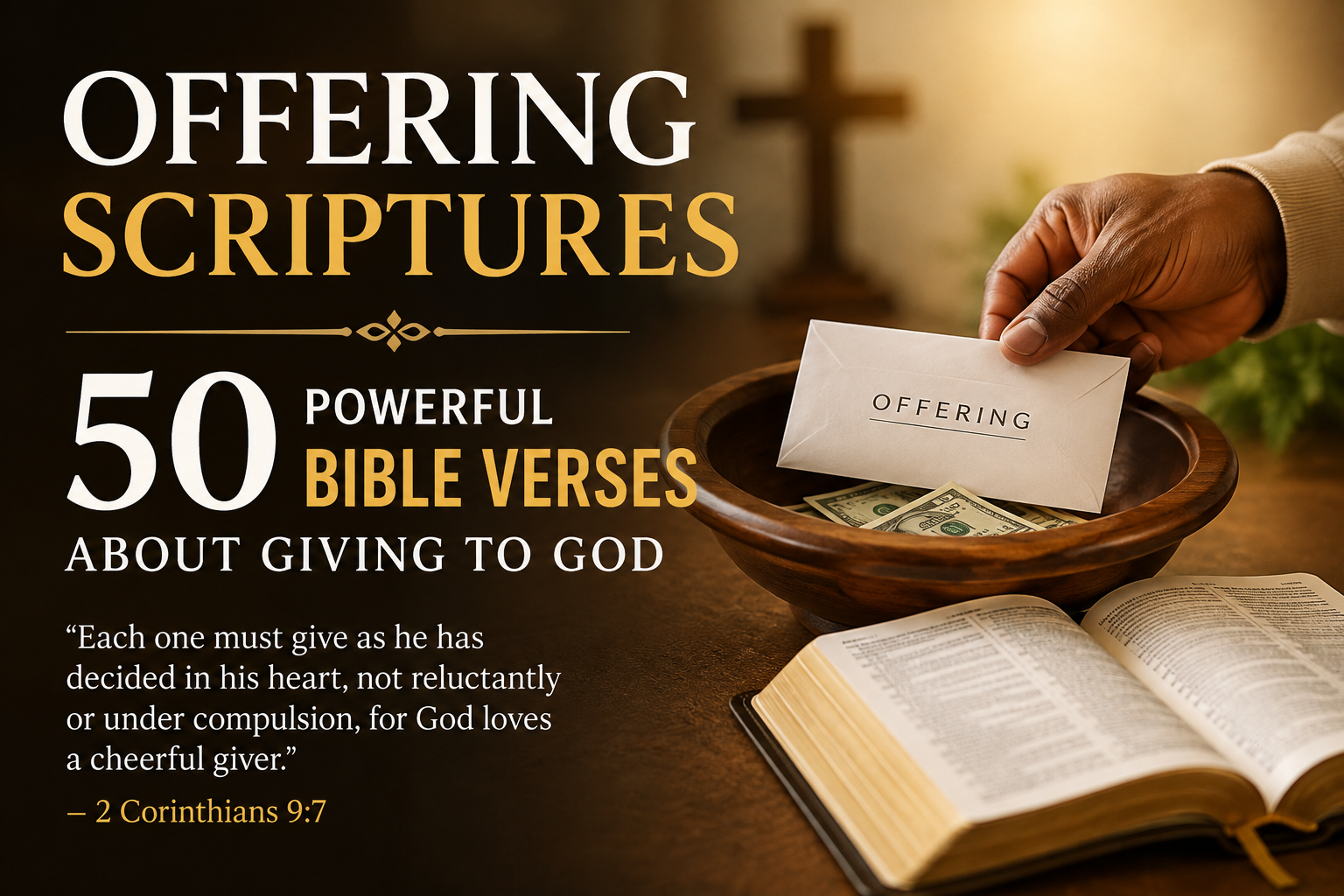
Giving is one of the most meaningful ways believers express their love, gratitude, and trust in God. Throughout the Bible, offerings were presented as acts of worship, thanksgiving, obedience, and devotion. From the offerings of Abel and Noah in the Old Testament to the cheerful giving encouraged in the New Testament, Scripture consistently teaches that God values a willing and generous heart.
If you’re searching for offering Scriptures, you may be preparing to give an offering during a church service, seeking Bible verses for an offering message, studying what God says about generosity, or looking for encouragement to give faithfully. The Bible provides clear guidance on why believers should give and the attitude they should have when bringing their offerings before the Lord.
It is important to understand that biblical giving is not simply about money. Offerings can include our finances, time, talents, service, worship, thanksgiving, and even our lives surrendered to God. While financial giving supports God’s work and helps those in need, the heart behind the gift matters far more than the amount given.
In this comprehensive guide, you’ll discover 50 powerful offering Scriptures, their biblical meaning, practical life applications, answers to common questions, and a heartfelt prayer for generosity.
What Is an Offering in the Bible?
An offering is a gift presented to God as an act of worship, gratitude, thanksgiving, repentance, or dedication. Under the Old Testament covenant, God instructed Israel to bring different kinds of offerings, including:
- Burnt offerings
- Grain offerings
- Peace offerings
- Sin offerings
- Guilt offerings
- Freewill offerings
- Thank offerings
These offerings pointed toward obedience and ultimately foreshadowed Jesus Christ, whose sacrifice fulfilled the Old Testament sacrificial system once and for all.
Today, Christians no longer offer animal sacrifices because Jesus’ death on the cross is the perfect and final sacrifice for sin (Hebrews 10:10–14). However, believers are still called to offer:
- Cheerful financial giving
- Worship and praise
- Thanksgiving
- Acts of kindness
- Service to others
- Their bodies as living sacrifices
- Their lives in obedience to God
Why Are Offerings Important?
Biblical offerings are important because they demonstrate:
- Love for God
- Gratitude for His blessings
- Trust in His provision
- Obedience to His Word
- Compassion toward others
- Commitment to God’s kingdom
- Faith that He will provide every need
Giving is never about purchasing God’s favor. Instead, it is a joyful response to the grace we have already received through Jesus Christ.
What Does the Bible Teach About Giving?
The Bible teaches believers to give:
- Willingly
- Cheerfully
- Generously
- Sacrificially
- Regularly
- Humbly
- Without seeking recognition
- According to their ability
- Out of gratitude
- With faith in God’s provision
God looks beyond the size of the offering and examines the condition of the giver’s heart.
Benefits of Biblical Giving
Scripture reveals several blessings that come from faithful generosity:
- It honors God.
- It supports God’s work.
- It helps those in need.
- It strengthens our faith.
- It teaches contentment.
- It loosens the grip of greed.
- It reflects God’s generous character.
- It stores up eternal treasures.
- It produces joy and thanksgiving.
- It becomes a testimony of God’s love.
These blessings are not a guarantee of material wealth but reminders that God delights in faithful and obedient hearts.
How to Give a Biblical Offering
The Bible provides practical principles for giving in a way that pleases God.
1. Give God Your First and Best
Rather than giving what is left over, honor God first with your resources, just as the Israelites offered the firstfruits of their harvest.
Key Scripture: Proverbs 3:9–10
2. Give Cheerfully
Never give because of guilt or pressure. Give because you love God and are grateful for His blessings.
Key Scripture: 2 Corinthians 9:7
3. Give According to Your Ability
God does not expect everyone to give the same amount. He calls each believer to give faithfully according to what He has provided.
Key Scripture: 2 Corinthians 8:12
4. Give to Help Others
Biblical generosity includes caring for the poor, widows, orphans, missionaries, and fellow believers in need.
Key Scripture: Proverbs 19:17
5. Support God’s Work
Offerings help churches, missionaries, pastors, and ministries continue sharing the Gospel around the world.
Key Scripture: Philippians 4:18
6. Give With Gratitude
Remember that everything you own comes from God. Giving is simply returning a portion of His blessings.
Key Scripture: 1 Chronicles 29:14
Common Mistakes to Avoid When Giving
Even sincere believers can develop unhealthy attitudes toward giving. Scripture encourages us to avoid these common mistakes:
Giving to Impress Others
Jesus warned against giving for public recognition (Matthew 6:1–4). Our generosity should glorify God, not ourselves.
Giving Reluctantly
God loves a cheerful giver. If giving feels forced, ask God to renew your heart and remind you of His grace.
Trusting in Money Instead of God
Generosity helps keep our hearts focused on the Lord rather than on wealth or possessions.
Neglecting Those in Need
Biblical giving includes practical compassion for the poor, the hungry, and those facing hardship.
Forgetting That Worship Includes More Than Money
Offer your praise, obedience, time, talents, love, and service to God alongside your financial gifts.
50 Powerful Offering Scriptures
In the following sections, we’ll explore 50 carefully selected Bible verses about offerings, each with a clear explanation and practical life application to help you understand what God’s Word teaches about generosity and worship.
1. Genesis 4:3–5
“In the course of time Cain brought some of the fruits of the soil as an offering to the LORD. And Abel also brought an offering—fat portions from some of the firstborn of his flock. The LORD looked with favor on Abel and his offering, but on Cain and his offering he did not look with favor.”
Meaning
This is the Bible’s first recorded offering. While both Cain and Abel brought gifts to God, Abel’s offering was accepted because it was presented in genuine faith and with his best. Hebrews 11:4 explains that Abel offered his sacrifice by faith, showing that God values the heart behind the gift.
Life Application
God is not impressed by the size of your offering but by the sincerity of your heart. Give with faith, gratitude, and a desire to honor Him above all else.
2. Genesis 8:20–21
“Then Noah built an altar to the LORD… and sacrificing burnt offerings on it. The LORD smelled the pleasing aroma…”
Meaning
After surviving the flood, Noah’s first response was worship. Before building a home or planting crops, he offered a sacrifice of thanksgiving to God for His protection and faithfulness.
Life Application
When God answers your prayers or brings you through difficult seasons, take time to thank Him. Gratitude should always accompany His blessings.
3. Genesis 14:19–20
“Then Abram gave him a tenth of everything.”
Meaning
After God gave Abram victory in battle, he willingly gave a tenth of the spoils to Melchizedek, the priest of God Most High. This act reflected gratitude and recognition that every blessing ultimately came from God.
Life Application
Honor God first with what He has entrusted to you. Generous giving is an act of worship that acknowledges Him as your Provider.
4. Exodus 25:1–2
“The LORD said to Moses, ‘Tell the Israelites to bring me an offering. You are to receive the offering for me from everyone whose heart prompts them to give.'”
Meaning
God invited the Israelites to contribute toward building the Tabernacle, but He emphasized voluntary giving. He desired willing hearts rather than reluctant obedience.
Life Application
Give because you love God, not because you feel pressured. The attitude of the giver matters as much as the gift itself.
5. Exodus 35:5
“From what you have, take an offering for the LORD. Everyone who is willing is to bring to the LORD an offering.”
Meaning
God asked His people to give according to what they had, not according to what they lacked. The focus was on willingness and generosity rather than equal amounts.
Life Application
God does not expect everyone to give the same amount. Faithful giving is measured by obedience and willingness, not by comparison with others.
6. Deuteronomy 16:17
“Each of you must bring a gift in proportion to the way the LORD your God has blessed you.”
Meaning
Israel’s offerings were to reflect God’s blessings in their lives. Those who had received more were encouraged to give more, demonstrating gratitude and responsible stewardship.
Life Application
Consider God’s faithfulness when deciding how to give. Let generosity grow as you recognize His continual provision.
7. Proverbs 3:9–10
“Honor the LORD with your wealth, with the firstfruits of all your crops; then your barns will be filled to overflowing…”
Meaning
The principle of firstfruits teaches believers to put God first. Rather than giving what was left over, God’s people honored Him with the first and best portion of what He provided.
Life Application
Place God first in your finances and priorities. Giving your best reflects trust that He will continue to provide for your needs.
8. Malachi 3:10
“Bring the whole tithe into the storehouse, that there may be food in my house. Test me in this… and see if I will not throw open the floodgates of heaven.”
Meaning
God challenged Israel to stop withholding what belonged to Him and to trust His faithfulness. The promise was given within the covenant God made with Israel, encouraging obedience and dependence on Him.
Life Application
Faithful giving demonstrates trust in God’s provision. Rather than giving out of fear, give with confidence that God knows your needs and is faithful to care for His people.
9. Psalm 96:8
“Ascribe to the LORD the glory due his name; bring an offering and come into his courts.”
Meaning
Offerings were closely connected with worship. Bringing a gift before the Lord was a visible expression of honoring His greatness and acknowledging His holiness.
Life Application
Every offering should be an act of worship. As you give, focus on God’s worthiness rather than simply fulfilling a religious routine.
10. 2 Samuel 24:24
“I will not sacrifice to the LORD my God burnt offerings that cost me nothing.”
Meaning
King David refused to offer a sacrifice that required no personal cost. He understood that true worship often involves sacrifice and wholehearted devotion to God.
Life Application
Giving to God should involve trust and commitment, not merely convenience. Whether you offer your time, resources, talents, or finances, let your gift reflect genuine love and devotion to Him.
11. Matthew 6:3–4
“But when you give to the needy, do not let your left hand know what your right hand is doing, so that your giving may be in secret. Then your Father, who sees what is done in secret, will reward you.”
Meaning
Jesus taught that giving should never be motivated by a desire for praise or recognition. God values quiet generosity that comes from a sincere heart rather than public displays meant to impress others.
Life Application
Give without seeking attention or applause. Let your generosity reflect your love for God, trusting that He sees every act of kindness.
12. Matthew 6:19–21
“Do not store up for yourselves treasures on earth… But store up for yourselves treasures in heaven… For where your treasure is, there your heart will be also.”
Meaning
Jesus reminds believers that earthly possessions are temporary, but investments made for God’s kingdom have eternal value. Our giving reveals what we truly treasure.
Life Application
View your offerings as an eternal investment. Support God’s work with the understanding that spiritual rewards far outweigh temporary wealth.
13. Mark 12:41–44
“This poor widow put more into the treasury than all the others… They all gave out of their wealth; but she, out of her poverty, put in everything—all she had to live on.”
Meaning
Jesus praised the widow because her small offering reflected extraordinary faith and complete trust in God. While others gave from abundance, she gave sacrificially.
Life Application
Never compare your gift with someone else’s. God measures generosity by the heart and sacrifice behind the offering, not by its monetary value.
14. Luke 6:38
“Give, and it will be given to you. A good measure, pressed down, shaken together and running over, will be poured into your lap.”
Meaning
Jesus teaches the principle of generosity. Those who freely bless others often experience God’s abundant provision, though His blessings may come in spiritual, emotional, or material ways according to His wisdom.
Life Application
Develop a generous lifestyle. Trust God to provide for your needs as you faithfully share His blessings with others.
15. Luke 21:1–4
“This poor widow has put in more than all the others. All these people gave their gifts out of their wealth; but she out of her poverty put in all she had to live on.”
Meaning
Luke records the same account of the widow’s offering, emphasizing that God values wholehearted trust over impressive amounts. Her sacrifice became a lasting example of faithful giving.
Life Application
Don’t underestimate what God can do through your faithful obedience. Even small gifts offered with sincere faith are precious to Him.
16. Acts 2:44–45
“All the believers were together and had everything in common. They sold property and possessions to give to anyone who had need.”
Meaning
The early church demonstrated extraordinary generosity by caring for one another’s needs. Their willingness to share reflected genuine love and unity in Christ.
Life Application
Look for opportunities to meet the needs of others. Generosity strengthens Christian community and demonstrates God’s love in practical ways.
17. Acts 20:35
“It is more blessed to give than to receive.”
Meaning
Paul quotes a saying of Jesus that highlights the joy found in generosity. Giving benefits both the recipient and the giver by cultivating gratitude, compassion, and dependence on God.
Life Application
Experience the joy of blessing others. Make generosity a regular part of your Christian life rather than an occasional act.
18. Romans 12:1
“Therefore, I urge you… to offer your bodies as a living sacrifice, holy and pleasing to God—this is your true and proper worship.”
Meaning
The greatest offering a believer can give is a life fully surrendered to God. Worship extends beyond financial gifts to include our thoughts, actions, decisions, and daily obedience.
Life Application
Offer your entire life to God. Let your work, relationships, service, and worship reflect your commitment to Christ.
19. Romans 12:8
“…If it is giving, then give generously…”
Meaning
Paul identifies generosity as a spiritual gift and encourages those who have this gift to exercise it faithfully and wholeheartedly.
Life Application
Whether your gift is financial support, hospitality, encouragement, or service, use it generously to build God’s kingdom and bless others.
20. 2 Corinthians 8:2–5
“In the midst of a very severe trial, their overflowing joy and their extreme poverty welled up in rich generosity.”
Meaning
The Macedonian churches gave generously despite experiencing poverty and hardship. Their generosity flowed from joyful devotion to Christ rather than material abundance.
Life Application
Don’t wait until you feel wealthy to become generous. A giving heart is shaped by faith and gratitude, not by the size of your bank account.
21. 2 Corinthians 9:6
“Remember this: Whoever sows sparingly will also reap sparingly, and whoever sows generously will also reap generously.”
Meaning
Paul uses the illustration of a farmer planting seeds to explain the principle of generosity. A generous heart often results in greater opportunities to experience God’s blessings and to bless others. This passage is about God’s gracious provision, not a guarantee of financial wealth.
Life Application
Give generously without expecting immediate rewards. Trust God to use your faithfulness for His glory and to provide for your needs according to His perfect will.
22. 2 Corinthians 9:7
“Each of you should give what you have decided in your heart to give, not reluctantly or under compulsion, for God loves a cheerful giver.”
Meaning
This is one of the most quoted offering Scriptures. God desires voluntary, joyful giving rather than gifts offered out of guilt, fear, or obligation. The attitude behind the gift is just as important as the gift itself.
Life Application
Before giving, examine your heart. Let every offering be an expression of gratitude and worship rather than duty.
23. 2 Corinthians 9:8
“And God is able to bless you abundantly, so that in all things at all times, having all that you need, you will abound in every good work.”
Meaning
Paul assures believers that God faithfully supplies what His people need so they can continue serving others generously. God’s provision equips believers for good works and faithful stewardship.
Life Application
Trust God to provide what you need as you faithfully support His work and care for others.
24. Philippians 4:18
“I have received full payment and have more than enough. I am amply supplied… They are a fragrant offering, an acceptable sacrifice, pleasing to God.”
Meaning
Paul described the financial support he received from the Philippian church as a spiritual sacrifice that pleased God. Their generosity became an act of worship, not merely a financial transaction.
Life Application
When you give to support God’s work, remember that your offering is ultimately presented to God as an act of worship.
25. Philippians 4:19
“And my God will meet all your needs according to the riches of his glory in Christ Jesus.”
Meaning
After thanking the Philippians for their generosity, Paul reminded them that God would faithfully provide for them. This promise encourages believers to trust God’s care as they live generously.
Life Application
Give with confidence in God’s faithfulness. While His provision may not always look the way you expect, He promises to supply every genuine need.
26. Hebrews 13:15
“Through Jesus, therefore, let us continually offer to God a sacrifice of praise—the fruit of lips that openly profess his name.”
Meaning
Under the New Covenant, believers offer continual praise to God through worship and thanksgiving. Our words of praise become spiritual offerings that honor Him.
Life Application
Don’t limit your offerings to finances. Worship, gratitude, and faithful praise are precious gifts you can offer God every day.
27. Hebrews 13:16
“And do not forget to do good and to share with others, for with such sacrifices God is pleased.”
Meaning
Acts of kindness, generosity, and sharing are described as sacrifices that delight God. Genuine worship is demonstrated through practical love for others.
Life Application
Look for opportunities to help those around you. Generosity is expressed not only through money but also through compassion, service, and encouragement.
28. James 1:17
“Every good and perfect gift is from above, coming down from the Father of the heavenly lights…”
Meaning
Everything believers possess ultimately comes from God. Recognizing Him as the source of every blessing inspires grateful and generous hearts.
Life Application
Remember that you are a steward, not the owner, of God’s blessings. Give thankfully because everything you have comes from Him.
29. 1 Timothy 6:17–19
“Command those who are rich… to do good, to be rich in good deeds, and to be generous and willing to share.”
Meaning
Paul warns against placing confidence in wealth and encourages believers to use their resources for good. True riches are found in generosity and eternal investments rather than temporary possessions.
Life Application
Whether you have little or much, use your resources wisely to bless others and advance God’s kingdom.
30. Proverbs 11:24–25
“One person gives freely, yet gains even more… A generous person will prosper; whoever refreshes others will be refreshed.”
Meaning
This proverb teaches the principle that generosity often brings blessing. While God’s blessings are not always financial, He refreshes those who faithfully care for others.
Life Application
Live with an open hand instead of a closed fist. As you bless others through your generosity, trust God to strengthen, encourage, and sustain you.
31. Proverbs 19:17
“Whoever is kind to the poor lends to the LORD, and he will reward them for what they have done.”
Meaning
God considers acts of generosity toward the poor as service rendered to Him. This verse reveals His deep concern for the vulnerable and His promise to honor those who show compassion.
Life Application
Support those in need whenever you can. Your generosity reflects God’s love and becomes an act of worship that pleases Him.
32. Proverbs 22:9
“The generous will themselves be blessed, for they share their food with the poor.”
Meaning
A generous person willingly shares God’s blessings with others. This verse emphasizes that true generosity flows from a compassionate heart rather than from abundance alone.
Life Application
Look for opportunities to bless others through hospitality, meals, financial assistance, or simple acts of kindness.
33. Proverbs 28:27
“Those who give to the poor will lack nothing, but those who close their eyes to them receive many curses.”
Meaning
God calls His people to care for those in need instead of ignoring them. This proverb highlights the importance of generosity and warns against selfishness.
Life Application
Be attentive to the needs around you. Even small acts of generosity can make a significant difference in someone’s life.
34. Deuteronomy 15:10
“Give generously to them and do so without a grudging heart; then because of this the LORD your God will bless you in all your work and in everything you put your hand to.”
Meaning
God instructed Israel to give freely and joyfully to those in need. The focus is not only on giving but also on maintaining a willing and compassionate attitude.
Life Application
Don’t allow generosity to become a burden. Give with joy, trusting God to guide and bless your faithful stewardship.
35. Psalm 112:5
“Good will come to those who are generous and lend freely, who conduct their affairs with justice.”
Meaning
The righteous are known for their generosity, integrity, and fairness. Their lives reflect God’s character through both their actions and their stewardship.
Life Application
Honor God by managing your resources wisely and using them to help others with compassion and integrity.
36. Psalm 112:9
“They have freely scattered their gifts to the poor, their righteousness endures forever; their horn will be lifted high in honor.”
Meaning
The psalmist praises those who generously care for the poor. Their kindness leaves a lasting legacy that brings glory to God.
Life Application
Invest in eternal values by using your resources to bless those in need and advance God’s kingdom.
37. Luke 3:11
“John answered, ‘Anyone who has two shirts should share with the one who has none, and anyone who has food should do the same.'”
Meaning
John the Baptist taught that genuine repentance produces generosity. Faith should naturally lead believers to care for others in practical ways.
Life Application
Share what God has given you. Generosity doesn’t always require wealth—it begins with a willing heart.
38. Acts 4:32–35
“No one claimed that any of their possessions was their own… There were no needy persons among them.”
Meaning
The early church demonstrated remarkable unity by willingly sharing resources so that everyone’s needs were met. Their generosity reflected the transforming power of the gospel.
Life Application
Support your church and community by looking for practical ways to help those who are struggling. Generosity strengthens the body of Christ.
39. 2 Corinthians 8:12
“For if the willingness is there, the gift is acceptable according to what one has, not according to what one does not have.”
Meaning
God evaluates our giving based on willingness and faithfulness, not on the amount we contribute. He never expects believers to give beyond what they are able.
Life Application
Don’t compare your giving with others. Offer what you can with a joyful and willing heart, knowing that God values faithful obedience.
40. Matthew 10:42
“And if anyone gives even a cup of cold water to one of these little ones… truly I tell you, that person will certainly not lose their reward.”
Meaning
Jesus teaches that even the smallest act of kindness done in His name is valuable to God. No gift offered with genuine love is insignificant.
Life Application
Never underestimate small acts of generosity. A simple gesture of kindness can become a powerful testimony of God’s love.
41. Matthew 5:16
“Let your light shine before others, that they may see your good deeds and glorify your Father in heaven.”
Meaning
Jesus taught that acts of kindness and generosity should ultimately point people to God. While giving should never be done to seek personal praise, our good works can become a testimony that leads others to glorify the Lord.
Life Application
Let your generosity reflect God’s love. Give in ways that draw attention to Christ rather than to yourself.
42. Romans 15:26–27
“For Macedonia and Achaia were pleased to make a contribution for the poor among the Lord’s people in Jerusalem.”
Meaning
The early churches willingly gave financial support to believers experiencing hardship. Their generosity demonstrated unity within the body of Christ and gratitude for the spiritual blessings they had received.
Life Application
Support fellow believers who are facing difficult circumstances. Generosity strengthens the church and reflects Christian love.
43. 1 Chronicles 29:9
“The people rejoiced at the willing response of their leaders, for they had given freely and wholeheartedly to the LORD.”
Meaning
As preparations were made for the temple, God’s people gave generously with joyful hearts. Their willingness to contribute created an atmosphere of worship and thanksgiving.
Life Application
Give with enthusiasm rather than reluctance. Joyful generosity honors God and encourages others to serve Him faithfully.
44. 1 Chronicles 29:14
“But who am I, and who are my people, that we should be able to give as generously as this? Everything comes from you, and we have given you only what comes from your hand.”
Meaning
King David humbly acknowledged that every blessing belongs to God. Their offerings were simply returning a portion of what God had already provided.
Life Application
Remember that you are a steward of God’s resources. Giving becomes easier when you recognize that everything you have comes from Him.
45. Ecclesiastes 11:1
“Ship your grain across the sea; after many days you may receive a return.”
Meaning
This verse encourages wise generosity and faithful stewardship. It reminds believers that acts of giving and investing in good works often produce blessings over time, even if the results are not immediately visible.
Life Application
Continue giving faithfully without expecting instant results. Trust God to use your generosity according to His perfect timing.
46. Isaiah 32:8
“But the noble make noble plans, and by noble deeds they stand.”
Meaning
Godly people are known for honorable actions, including generosity and compassion. A generous lifestyle reflects a heart transformed by God’s grace.
Life Application
Be intentional about living generously. Plan ahead to support your church, missions, charities, and people in need.
47. Luke 12:33–34
“Sell your possessions and give to the poor… For where your treasure is, there your heart will be also.”
Meaning
Jesus taught that believers should prioritize eternal treasures over temporary possessions. Generosity reveals where our true devotion lies.
Life Application
Examine your priorities regularly. Let your giving reflect your commitment to God’s kingdom rather than material wealth.
48. 3 John 1:5–8
“Dear friend, you are faithful in what you are doing for the brothers and sisters, even though they are strangers to you.”
Meaning
John commended believers who generously supported traveling Christian workers. Their hospitality and financial assistance helped spread the gospel.
Life Application
Support pastors, missionaries, evangelists, and Christian ministries that faithfully proclaim God’s Word.
49. Psalm 50:14
“Sacrifice thank offerings to God, fulfill your vows to the Most High.”
Meaning
God desires worship that flows from gratitude and sincere devotion. Thank offerings reminded His people to acknowledge His goodness and faithfulness.
Life Application
Let thanksgiving accompany every offering you bring before God. Gratitude transforms giving into joyful worship.
50. Romans 11:36
“For from him and through him and for him are all things. To him be the glory forever! Amen.”
Meaning
Paul concludes by declaring that everything belongs to God and exists for His glory. This truth forms the foundation of biblical stewardship and generosity.
Life Application
Make God’s glory the ultimate purpose of every offering. Whether you give money, time, talents, or acts of service, let everything honor Him.
Key Lessons About Offering Scriptures
These 50 Bible verses reveal timeless principles about giving:
- God values the heart of the giver more than the amount given.
- Offerings are acts of worship, gratitude, and obedience.
- Believers are called to give cheerfully, willingly, and generously.
- Everything we possess belongs to God, and we are faithful stewards of His blessings.
- Generosity reflects God’s loving and giving character.
- Biblical giving supports the church, helps those in need, and advances the gospel.
- Every act of generosity, no matter how small, matters to God.
Frequently Asked Questions (FAQs)
What is an offering according to the Bible?
An offering is a gift presented to God as an act of worship, thanksgiving, devotion, or generosity. Under the New Testament, offerings include not only finances but also our praise, service, time, talents, and lives dedicated to God.
What is the difference between a tithe and an offering?
A tithe traditionally refers to giving one-tenth of one’s increase, particularly under the Old Testament law. An offering is a voluntary gift given beyond or apart from the tithe as an expression of worship, gratitude, or support for God’s work.
Does God care about the amount I give?
Scripture emphasizes that God looks at the heart and attitude of the giver. The widow’s small offering pleased Jesus because she gave sacrificially and trusted God completely.
Should Christians give cheerfully?
Yes. 2 Corinthians 9:7 teaches that God loves a cheerful giver. Christian generosity should be motivated by gratitude and love, not guilt or pressure.
What can I offer God besides money?
You can offer:
- Praise and worship
- Thanksgiving
- Your time
- Your talents
- Acts of kindness
- Service to others
- Hospitality
- Prayer
- Obedience
- Your whole life as a living sacrifice
A Prayer for Generosity and Faithful Giving
Heavenly Father,
Thank You for being the source of every good and perfect gift. Everything I have belongs to You, and I am grateful for Your constant love and faithful provision.
Teach me to give with a joyful, willing, and generous heart. Help me to trust You completely, knowing that You are my Provider and that You will supply all my needs according to Your riches in Christ Jesus.
Keep me from greed, selfishness, and fear. Instead, fill me with compassion for those in need and a desire to support the work of Your kingdom. May every offering I bring—whether my finances, time, talents, or service—be an act of worship that brings glory to Your name.
Use my life to bless others and to share the love of Jesus Christ with the world.
In Jesus’ name, Amen.
Conclusion
Giving has always been an important part of worship throughout the Bible. From the offerings of Abel and Noah to the cheerful generosity taught by Jesus and the apostles, Scripture consistently reminds us that God desires willing hearts more than impressive gifts.
These 50 offering Scriptures show that generosity is not simply about finances—it is about trusting God, loving others, and honoring Him with everything He has entrusted to us. Whether we give money, time, talents, praise, or acts of service, every offering becomes meaningful when it is presented with faith, gratitude, and obedience.
As you meditate on these verses, ask God to develop a generous heart that reflects His own. May your giving become a joyful expression of worship, a blessing to others, and a testimony of God’s goodness. Above all, may every offering you bring point people to Jesus Christ, the greatest gift God has ever given to the world.