
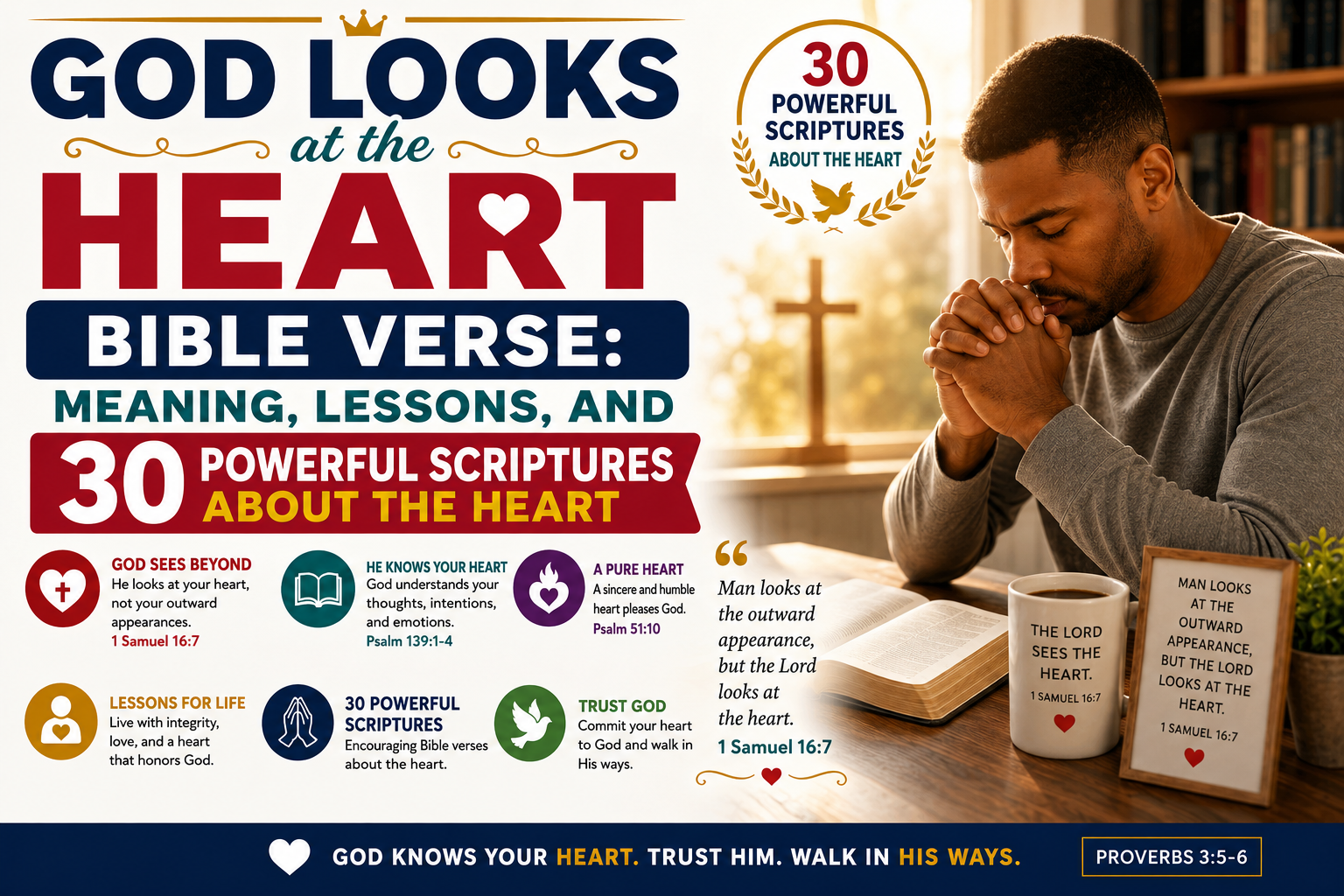
People often form opinions based on what they can see. We admire someone’s appearance, achievements, wealth, education, or influence and assume those outward qualities reveal who they truly are. However, the Bible teaches a very different perspective. God is not impressed by appearances alone—He looks beyond the surface and examines the heart.
This powerful truth is found in 1 Samuel 16:7, where God tells the prophet Samuel:
“People look at the outward appearance, but the Lord looks at the heart.”
These words were spoken during one of the most significant moments in Israel’s history: the selection of a new king. While Samuel was drawn to the impressive appearance of Jesse’s oldest son, God had already chosen someone else—David, a young shepherd whose heart was fully devoted to Him.
The message of this verse is just as relevant today. In a culture that often values image over character, God reminds us that what matters most is the condition of our hearts. He sees our thoughts, motives, intentions, faith, and sincerity. Nothing is hidden from Him.
Whether you feel overlooked because others underestimate you or you’re seeking to grow closer to God, this verse offers both comfort and challenge. It assures us that God values genuine faith more than outward success, while also calling us to cultivate hearts marked by humility, integrity, and obedience.
In this guide, we’ll explore the meaning of the “God looks at the heart” Bible verse, its historical context, key life lessons, related Scriptures, and practical ways to develop a heart that pleases God. By understanding this timeless passage, you’ll discover how God’s perspective can transform the way you view yourself, others, and your relationship with Him.
What Is the “God Looks at the Heart” Bible Verse?
The primary Bible verse that teaches this truth is 1 Samuel 16:7. It is one of the most well-known Scriptures about God’s ability to see beyond outward appearances and evaluate the true condition of a person’s heart.
1 Samuel 16:7 (NIV)
“But the Lord said to Samuel, ‘Do not consider his appearance or his height, for I have rejected him. The Lord does not look at the things people look at. People look at the outward appearance, but the Lord looks at the heart.'”
This verse reveals an important difference between human judgment and God’s judgment.
People naturally notice visible qualities such as beauty, intelligence, wealth, social status, talent, or accomplishments. While these characteristics may have value, they do not determine a person’s spiritual condition or relationship with God.
The Lord looks much deeper. He examines the heart—the center of our thoughts, motives, desires, attitudes, and faith. God knows why we do what we do, not just what we do. He sees sincerity where others see weakness, and He recognizes pride even when it is hidden behind impressive achievements.
This truth is both comforting and convicting:
- It comforts us because God knows our genuine love for Him even when others misunderstand or underestimate us.
- It challenges us because we cannot hide selfish motives, hypocrisy, or unconfessed sin from the One who sees everything.
Unlike people, who often make quick judgments based on first impressions, God always judges with perfect knowledge, justice, and wisdom.
What Does It Mean That God Looks at the Heart?
When the Bible says that God looks at the heart, it is not referring to the physical organ that pumps blood. In Scripture, the heart represents the inner person—the place where our character, thoughts, emotions, desires, and spiritual life originate.
The heart includes our:
- Thoughts and attitudes.
- Motives behind our actions.
- Faith and trust in God.
- Love for others.
- Desires and ambitions.
- Moral character.
- Willingness to obey God’s Word.
- Spiritual condition.
This means God evaluates far more than our outward behavior. Two people may perform the same good deed, yet God knows whether it was done out of genuine love, obedience, pride, or a desire for recognition.
Throughout the Bible, the heart is presented as the source of our words and actions. Jesus taught this same principle when He said that what comes out of a person’s mouth reflects what is in their heart (Matthew 12:34–35).
Because of this, God desires transformation from the inside out. He is not interested in empty religious rituals or appearances that hide an unchanged heart. Instead, He seeks people who worship Him with sincerity, humility, and wholehearted devotion.
Why This Verse Still Matters Today
The message of 1 Samuel 16:7 speaks powerfully into modern life.
Today’s culture often places great importance on:
- Physical appearance.
- Social media popularity.
- Financial success.
- Academic achievements.
- Career status.
- Public recognition.
These things can easily become the standard by which people measure themselves and others. However, God’s standards remain unchanged.
He values:
- Integrity over image.
- Faith over fame.
- Humility over pride.
- Obedience over performance.
- Love over popularity.
- Character over accomplishments.
This truth encourages believers not to define their worth by society’s standards. Instead, our greatest goal should be to develop a heart that honors God in every area of life.
When you understand that God looks at the heart, you become less concerned with impressing people and more committed to pleasing the One who knows you completely.
The Historical Context of 1 Samuel 16:7
To fully understand the meaning of “The Lord looks at the heart,” it’s important to know what was happening when God spoke these words. The verse comes from a pivotal moment in Israel’s history—the transition from King Saul to King David.
Without this context, it’s easy to miss the depth of God’s message.
Israel Needed a New King
Israel’s first king was Saul. At the beginning of his reign, Saul showed promise. He was physically impressive, standing taller than anyone else in Israel (1 Samuel 9:2), and many people believed he looked like the perfect king.
However, Saul repeatedly chose disobedience over obedience to God.
Instead of fully following the Lord’s commands, he often relied on his own judgment. Over time, pride replaced humility, and his heart drifted away from God.
Because of Saul’s persistent disobedience, God rejected him as king—not because of his appearance, but because of his unwillingness to obey.
This teaches an important lesson: God values a heart that follows Him more than impressive outward qualities.
God Sends Samuel to Jesse’s House
After rejecting Saul, God instructed the prophet Samuel to travel to Bethlehem. There, he would anoint one of Jesse’s sons as the next king of Israel.
Samuel did not know which son God had chosen.
When Jesse presented his sons, Samuel naturally focused on the oldest son, Eliab.
Eliab looked like a king.
He was tall, strong, confident, and carried himself with authority. From a human perspective, he seemed to be the obvious choice.
Samuel thought to himself that this surely must be the Lord’s anointed.
God Corrects Samuel’s Thinking
At that moment, God spoke the words recorded in 1 Samuel 16:7:
“Do not consider his appearance or his height, for I have rejected him. The Lord does not look at the things people look at. People look at the outward appearance, but the Lord looks at the heart.”
This was more than a correction for Samuel—it revealed God’s standard for choosing leaders and evaluating people.
Samuel had unknowingly made the same mistake many others make today: judging by appearances.
God reminded him that external qualities can be misleading.
Only the Lord can see a person’s true motives, faith, humility, and character.
David Wasn’t Even Invited
One surprising detail in the story is that David wasn’t initially invited when Samuel came to anoint Israel’s next king.
Jesse presented seven of his sons, but David remained in the fields caring for the family’s sheep.
Perhaps Jesse assumed David was too young or insignificant.
Yet God had already chosen him.
Only after Samuel asked if there were any other sons did Jesse send for David.
When David arrived, God immediately told Samuel:
“Rise and anoint him; this is the one.” (1 Samuel 16:12)
What everyone else overlooked, God had already seen.
Why Did God Choose David?
David was not perfect. In fact, later in life he committed serious sins, including adultery with Bathsheba and arranging the death of her husband, Uriah. Yet David responded differently than Saul when confronted with his sin.
Instead of making excuses, David humbled himself, confessed his wrongdoing, and sought God’s forgiveness.
His prayer in Psalm 51 reveals a heart that genuinely desired restoration:
“Create in me a pure heart, O God, and renew a steadfast spirit within me.” (Psalm 51:10)
David’s life demonstrates that God is not looking for perfection but for hearts that are willing to repent, trust Him, and continue following His ways.
Lessons from Samuel, Eliab, and David
This account offers several timeless truths that still apply today.
1. First Impressions Can Be Misleading
Samuel assumed Eliab would be king because of his appearance.
God reminded him that appearances never tell the whole story.
Before forming opinions about others, we should remember that only God knows the heart.
2. God Often Chooses the Unexpected
David was a shepherd boy, the youngest son, and seemingly the least likely candidate to become king.
Throughout Scripture, God frequently works through people whom society overlooks.
This reminds us that your background, age, income, education, or social status does not limit what God can do through you.
3. Character Outlasts Appearance
Physical appearance changes over time.
Godly character continues to grow as we walk with the Lord.
The qualities God values—faith, humility, integrity, compassion, and obedience—have lasting significance.
4. God’s Plans Are Better Than Human Expectations
Samuel believed he knew who should become king.
God had a different plan.
There are times when we also believe we know what is best, yet God’s wisdom leads us in another direction.
Trusting His guidance brings greater blessings than relying on our own understanding.
What This Story Means for Christians Today
The story of Samuel and David reminds every believer that God is more interested in who we are becoming than how we appear to others.
Our culture often rewards image, influence, and popularity, but God’s kingdom values humility, faithfulness, and obedience.
Whether you serve in ministry, lead a family, work in business, or quietly honor God in your daily life, remember this encouraging truth:
God sees the faithfulness that others may never notice.
He knows every act of obedience, every sincere prayer, every hidden sacrifice, and every desire to follow Him.
That is why developing a heart that pleases God is far more important than trying to impress people.
What Does the Heart Represent in the Bible?
When the Bible says that God looks at the heart, it is not referring to the physical organ that pumps blood throughout the body. In Scripture, the heart represents the very center of a person’s inner life. It is where our thoughts, desires, emotions, intentions, and spiritual commitments originate.
Understanding this biblical meaning helps us appreciate why God places such importance on the condition of our hearts.
The Heart Is the Center of Our Inner Being
In the Bible, the heart is often used to describe the deepest part of who we are. It reflects our true character, even when no one else can see it.
The heart includes our:
- Thoughts and beliefs.
- Motives and intentions.
- Desires and ambitions.
- Emotions and attitudes.
- Conscience.
- Faith and trust in God.
- Willingness to obey God’s Word.
This means that while people see our actions, God sees the reasons behind those actions.
For example, two people may give generously to charity. One gives out of genuine compassion, while the other gives only to gain recognition. Although the outward action is the same, God sees the difference because He examines the heart.
The Heart Shapes Everything We Do
The Bible repeatedly teaches that our outward behavior begins with our inward condition.
Proverbs 4:23
“Above all else, guard your heart, for everything you do flows from it.”
This verse explains that our words, attitudes, choices, and relationships all flow from what is happening inside our hearts.
A heart filled with love, humility, and faith will naturally produce actions that honor God. On the other hand, a heart controlled by pride, bitterness, or selfishness will eventually reveal itself through our behavior.
This is why God focuses first on inner transformation rather than outward appearance.
Jesus Taught the Importance of the Heart
Jesus repeatedly emphasized that true righteousness begins in the heart.
When confronting religious leaders who appeared righteous on the outside, He pointed out that God cares about inward purity as much as outward obedience.
For example, Jesus taught that sinful attitudes such as hatred, lust, pride, and hypocrisy begin in the heart before they become visible actions.
He also said:
“Blessed are the pure in heart, for they will see God.” (Matthew 5:8)
A pure heart is one that sincerely seeks God, loves His truth, and desires to live according to His will.
God Searches Every Heart
Unlike people, God has complete knowledge of every human heart.
Jeremiah 17:10
“I the Lord search the heart and examine the mind, to reward each person according to their conduct.”
Nothing is hidden from Him.
God knows:
- Our secret prayers.
- Our private struggles.
- Our sincere faith.
- Our hidden fears.
- Our motives.
- Our intentions.
This truth can be comforting because God understands us completely, even when others misunderstand us.
It is also a reminder that we cannot hide hypocrisy or selfish motives behind outward religious activity.
Why the Condition of Your Heart Matters
The condition of your heart influences every part of your life.
A healthy spiritual heart produces:
- Love for God.
- Compassion for others.
- Humility.
- Forgiveness.
- Patience.
- Integrity.
- Peace.
- Joy.
- Faithfulness.
By contrast, an unhealthy heart often produces:
- Pride.
- Bitterness.
- Envy.
- Greed.
- Anger.
- Deception.
- Unforgiveness.
- Selfish ambition.
Because the heart directs our thoughts and actions, Scripture repeatedly encourages believers to examine their hearts and allow God to transform them.
Can God Change the Human Heart?
One of the greatest messages of the Bible is that God does not simply expose the condition of our hearts—He also offers to transform them.
No matter your past, God specializes in renewing hearts that are willing to turn to Him.
King David understood this after his sin and prayed:
“Create in me a pure heart, O God, and renew a steadfast spirit within me.” (Psalm 51:10)
David recognized that lasting change begins with God’s work on the inside.
The same truth applies today.
Through faith in Jesus Christ and the work of the Holy Spirit, God continues to shape believers into people who love Him more deeply and reflect His character more faithfully.
Signs of a Heart That Pleases God
The Bible describes several qualities that reflect a heart devoted to the Lord.
A heart that pleases God is:
- Humble rather than proud.
- Honest rather than deceptive.
- Compassionate rather than selfish.
- Forgiving rather than bitter.
- Faithful rather than double-minded.
- Obedient rather than rebellious.
- Thankful rather than complaining.
- Willing to repent when convicted of sin.
These qualities do not develop overnight, but they grow as we spend time in God’s Word, seek Him in prayer, and follow His guidance daily.
Reflection
The message of 1 Samuel 16:7 reminds us that while people may judge us by our appearance, success, or reputation, God sees the person we truly are. He knows our thoughts, motives, fears, and dreams, and He lovingly invites us to surrender our hearts to Him.
Instead of focusing primarily on changing the outside, ask God to transform the inside. A heart shaped by His grace will naturally produce a life that reflects His love, wisdom, and truth.
Why God Looks at the Heart Instead of Outward Appearance
One of the most powerful lessons from 1 Samuel 16:7 is that God evaluates people differently than the world does. Human beings naturally notice what is visible—appearance, accomplishments, influence, education, wealth, and reputation. God, however, looks beyond all of these and examines the heart.
This difference reveals God’s perfect wisdom and His desire for genuine relationships rather than outward performances.
1. Outward Appearance Can Be Deceptive
People often make judgments based on first impressions. Someone who is confident, attractive, successful, or well-spoken may appear trustworthy, while someone quiet or overlooked may be underestimated.
The Bible shows that appearances do not always reveal a person’s true character.
King Saul looked like the ideal leader. He was tall, strong, and impressive in appearance (1 Samuel 9:2). Yet over time, his pride and disobedience led him away from God.
David, by contrast, was a young shepherd who seemed unlikely to become king. While others overlooked him, God saw a heart that loved and trusted Him.
Lesson: Never assume that outward success reflects inward faithfulness.
2. God Desires Genuine Faith, Not Religious Performance
Throughout Scripture, God repeatedly warns against empty religion.
It is possible to:
- Attend church regularly.
- Pray publicly.
- Give generously.
- Know many Bible verses.
- Serve in ministry.
…and still have a heart that is far from Him.
Jesus confronted this issue when speaking to the religious leaders of His day. They carefully followed religious traditions, yet many lacked humility, compassion, and sincere devotion to God.
God is not looking for people who simply appear spiritual. He desires people whose love for Him is real and evident in the way they live.
Lesson: God values sincere devotion over outward religious activity.
3. Character Matters More Than Reputation
Reputation is what people think about you.
Character is who you are when no one else is watching.
Because God sees every thought, motive, and intention, He places greater importance on character than on public image.
A godly character includes qualities such as:
- Integrity.
- Honesty.
- Humility.
- Compassion.
- Faithfulness.
- Patience.
- Self-control.
- Love.
These qualities are developed through a relationship with God and are far more valuable than temporary recognition or popularity.
Lesson: Focus on becoming the person God wants you to be rather than trying to impress others.
4. God Knows the Motives Behind Every Action
Two people may perform exactly the same action while having completely different motives.
For example:
- One person may give generously because they genuinely care about others.
- Another may give only to receive praise or recognition.
From the outside, both actions appear identical.
But God sees the heart.
He knows why we serve, give, pray, worship, forgive, or help others.
This truth reminds believers to examine not only what they do but also why they do it.
Lesson: God is concerned with both our actions and our motives.
5. God’s Grace Is Available to Everyone
If God judged people only by human standards, many individuals in the Bible would never have been used for His purposes.
Consider these examples:
- David was a shepherd boy before becoming king.
- Moses struggled with fear and self-doubt.
- Rahab had a difficult past but became part of God’s redemptive plan.
- Peter denied Jesus three times but was restored and became a bold leader in the early church.
- Paul once persecuted Christians before becoming one of the greatest missionaries in history.
Their stories demonstrate that God specializes in transforming hearts.
Your past mistakes, failures, or background do not disqualify you from being used by God when your heart is surrendered to Him.
Lesson: God sees who you can become through His grace, not just who you have been.
Practical Lessons for Everyday Life
The truth that God looks at the heart should shape how we live and interact with others.
Be Slow to Judge Others
Avoid making assumptions based on appearance, social status, or first impressions.
Treat every person with dignity and respect, remembering that only God truly knows the heart.
Pursue Inner Growth
While caring for your appearance is not wrong, devote even greater attention to developing your spiritual life.
Spend time in prayer, study God’s Word, and ask the Holy Spirit to shape your character each day.
Serve God with the Right Motives
Whether you are serving in church, helping your neighbors, or supporting your family, do it out of love for God rather than a desire for recognition.
Faithfulness often matters more to God than visibility.
Trust God’s Evaluation Above People’s Opinions
There may be seasons when your efforts go unnoticed or your faithfulness is misunderstood.
Remember that God sees every act of obedience, every quiet prayer, every sacrifice, and every expression of love.
His approval is more valuable than human praise.
Reflection
The world often encourages us to build an impressive image, but God invites us to cultivate an authentic heart.
A beautiful appearance may attract attention, but a heart devoted to God brings lasting spiritual fruit.
Instead of asking, “How do people see me?”, a better question is:
“What does God see when He looks at my heart?”
As you seek Him daily, He will continue to transform your thoughts, motives, and desires so that your life reflects the character of Jesus Christ.
10 Practical Ways to Develop a Heart That Pleases God
Knowing that God looks at the heart naturally leads to an important question: How can I develop a heart that pleases Him?
The encouraging news is that God is more interested in transforming your heart than condemning your past. Through His Word, the Holy Spirit, and a growing relationship with Jesus Christ, He continually shapes believers into people who reflect His character.
While no one is perfect, these biblical habits can help you cultivate a heart that honors the Lord.
1. Spend Time in God’s Word Every Day
The Bible is God’s primary way of shaping our hearts and renewing our minds.
As you consistently read and meditate on Scripture, your thoughts begin to align with God’s truth. His Word corrects wrong attitudes, strengthens faith, and provides wisdom for everyday decisions.
Key Scripture
“Your word is a lamp for my feet, a light on my path.” (Psalm 119:105)
Practical Application
Set aside time each day—even if it’s just 15 to 20 minutes—to read the Bible. Ask yourself:
- What does this passage teach me about God?
- What does it reveal about my heart?
- How can I apply it today?
2. Pray with Honesty and Humility
Prayer is more than presenting requests to God. It is an opportunity to invite Him to examine your heart and transform you from within.
God already knows your thoughts, fears, and struggles. Honest prayer strengthens your relationship with Him.
Key Scripture
“Search me, God, and know my heart; test me and know my anxious thoughts.” (Psalm 139:23)
Practical Application
Ask God daily to reveal attitudes or motives that need to change, and trust Him to guide you with grace.
3. Confess Sin and Receive God’s Forgiveness
Even devoted believers stumble. The difference is that a heart devoted to God responds to conviction with repentance instead of excuses.
King David demonstrated this after his sin by praying:
“Create in me a pure heart, O God.” (Psalm 51:10)
Confession restores fellowship with God and keeps your heart sensitive to His leading.
Practical Application
Don’t allow guilt to create distance between you and God. Bring your failures to Him, accept His forgiveness, and continue walking in His grace.
4. Practice Humility
Humility is one of the clearest signs of a heart that pleases God.
A humble person recognizes that every blessing, ability, and opportunity comes from the Lord. They remain teachable and are willing to admit when they are wrong.
Key Scripture
“God opposes the proud but shows favor to the humble.” (James 4:6)
Practical Application
Choose gratitude over pride, and seek opportunities to serve others without expecting recognition.
5. Obey God Even When It’s Difficult
A heart that loves God desires to obey Him, even when obedience requires sacrifice.
True faith is demonstrated not merely by hearing God’s Word but by putting it into practice.
Key Scripture
“If you love me, keep my commands.” (John 14:15)
Practical Application
Ask yourself before making important decisions:
“Does this choice honor God?”
If the answer is yes, trust Him enough to obey.
6. Forgive Others as God Has Forgiven You
Bitterness hardens the heart, while forgiveness reflects the grace of Christ.
Forgiveness does not always erase the pain of what happened, but it frees you from carrying resentment and allows God to continue His healing work.
Key Scripture
“Be kind and compassionate to one another, forgiving each other, just as in Christ God forgave you.” (Ephesians 4:32)
Practical Application
Pray for the strength to forgive those who have hurt you. Forgiveness is often a process, but it begins with a willing heart.
7. Love Others Genuinely
Jesus taught that loving God and loving others are the two greatest commandments.
A transformed heart naturally expresses itself through compassion, kindness, generosity, and patience.
Key Scripture
“Love one another as I have loved you.” (John 13:34)
Practical Application
Look for practical ways to encourage someone each day through kind words, prayer, generosity, or acts of service.
8. Guard What Influences Your Heart
Everything you watch, read, listen to, and dwell on influences your heart over time.
The Bible encourages believers to protect their minds from influences that pull them away from God.
Key Scripture
“Above all else, guard your heart, for everything you do flows from it.” (Proverbs 4:23)
Practical Application
Evaluate the content you consume regularly. Choose influences that strengthen your faith and help you grow spiritually.
9. Seek the Holy Spirit’s Guidance
Lasting heart transformation is not achieved through willpower alone. It is the work of the Holy Spirit, who produces Christlike character in every believer.
As you submit to God’s leading, He changes your attitudes, desires, and priorities.
Key Scripture
“Walk by the Spirit, and you will not gratify the desires of the flesh.” (Galatians 5:16)
Practical Application
Before making decisions, pause to pray and ask the Holy Spirit for wisdom, discernment, and peace.
10. Live for God’s Approval Rather Than People’s Praise
One of the greatest applications of 1 Samuel 16:7 is learning to value God’s opinion above public recognition.
People may misunderstand your intentions or overlook your faithfulness, but God sees every act of obedience and every sincere desire to honor Him.
Living for His approval brings freedom from constantly seeking validation from others.
Key Scripture
“Whatever you do, work at it with all your heart, as working for the Lord.” (Colossians 3:23)
Practical Application
Focus on faithfulness rather than popularity. Whether your service is public or private, remember that God sees it all and delights in a heart devoted to Him.
A Heart That God Delights In
God is not searching for perfect people—He is looking for people whose hearts are surrendered to Him.
A heart that pleases God is:
- Humble enough to accept correction.
- Faithful enough to obey His Word.
- Loving enough to serve others.
- Honest enough to confess sin.
- Trusting enough to follow His guidance.
- Grateful enough to recognize His blessings.
As you pursue these qualities, remember that spiritual growth is a lifelong journey. God patiently shapes your heart day by day, making you more like Jesus Christ.
Reflection
The message of 1 Samuel 16:7 reminds us that the greatest transformation begins within. While the world encourages us to improve our image, God invites us to cultivate a heart marked by faith, integrity, humility, and love.
When your heart belongs to Him, your words, choices, and actions will increasingly reflect His character.
15 Related Bible Verses About the Heart
The truth found in 1 Samuel 16:7 is echoed throughout Scripture. From Genesis to Revelation, the Bible emphasizes that God is deeply concerned with the condition of our hearts. These verses help us understand how God sees us, why the heart matters, and how He transforms those who trust Him.
1. Proverbs 4:23
“Above all else, guard your heart, for everything you do flows from it.”
Meaning
This verse teaches that the heart is the source of our words, decisions, and actions. A healthy spiritual life begins with protecting your heart from sinful influences and filling it with God’s truth.
Life Application
Be intentional about what you allow into your mind through media, conversations, and relationships. Choose influences that strengthen your faith.
Prayer
Lord, help me guard my heart each day. Fill my mind with Your truth and keep me close to You. Amen.
2. Psalm 51:10
“Create in me a pure heart, O God, and renew a steadfast spirit within me.”
Meaning
After recognizing his sin, David asked God to transform him from the inside out. This prayer reminds us that God can forgive, restore, and renew anyone who sincerely repents.
Life Application
Bring your failures to God without fear. He delights in restoring hearts that humbly seek His forgiveness.
Prayer
Father, create a clean heart within me and renew my desire to follow You faithfully every day. Amen.
3. Jeremiah 17:10
“I the Lord search the heart and examine the mind.”
Meaning
Nothing is hidden from God. He knows every motive, thought, and intention. His judgments are always just because He sees the whole picture.
Life Application
Live with integrity, remembering that God values sincerity more than appearances.
Prayer
Lord, examine my heart and reveal anything that keeps me from walking closely with You. Amen.
4. Matthew 5:8
“Blessed are the pure in heart, for they will see God.”
Meaning
Jesus teaches that spiritual purity begins in the heart. Those who sincerely seek God and desire to honor Him experience deeper fellowship with Him.
Life Application
Ask God to remove attitudes such as pride, bitterness, or selfishness and replace them with His love and holiness.
Prayer
Heavenly Father, purify my heart and help me reflect the character of Jesus in everything I do. Amen.
5. Ezekiel 36:26
“I will give you a new heart and put a new spirit in you.”
Meaning
God promises transformation, not merely improvement. Through His grace, He gives believers new desires, new purpose, and a renewed relationship with Him.
Life Application
Trust that God is continually changing you through the work of the Holy Spirit.
Prayer
Lord, thank You for giving me a new heart. Continue shaping me into the person You created me to be. Amen.
6. Luke 6:45
“A good man brings good things out of the good stored up in his heart.”
Meaning
Our words and actions reveal what fills our hearts. A heart centered on God naturally produces kindness, truth, and love.
Life Application
Fill your heart with Scripture so your speech reflects God’s grace.
Prayer
Father, let my words encourage others and always bring honor to Your name. Amen.
7. Romans 10:10
“For it is with your heart that you believe and are justified.”
Meaning
Faith is more than intellectual agreement. Genuine belief comes from the heart and leads to a life transformed by Christ.
Life Application
Strengthen your faith by trusting God’s promises even when circumstances are difficult.
Prayer
Lord, deepen my faith and help me trust You with all my heart. Amen.
8. Psalm 139:23–24
“Search me, God, and know my heart… See if there is any offensive way in me.”
Meaning
David invites God to examine every part of his life. This humble prayer demonstrates a willingness to accept correction and spiritual growth.
Life Application
Regularly ask God to reveal areas where you need to grow in faith and obedience.
Prayer
Search my heart, Lord, and lead me in Your everlasting way. Amen.
9. Hebrews 4:12
“For the word of God is alive and active… it judges the thoughts and attitudes of the heart.”
Meaning
God’s Word exposes what is hidden within us and helps transform our thoughts and attitudes.
Life Application
Read the Bible with an open heart, allowing God’s truth to challenge and change you.
Prayer
Lord, let Your Word shape my heart and guide every decision I make. Amen.
10. Matthew 22:37
“Love the Lord your God with all your heart and with all your soul and with all your mind.”
Meaning
Jesus teaches that wholehearted love for God is the greatest commandment. Every area of life should reflect this love.
Life Application
Make your relationship with God the highest priority in your daily life.
Prayer
Father, teach me to love You with all my heart, soul, and mind. Amen.
11. Proverbs 3:5
“Trust in the Lord with all your heart and lean not on your own understanding.”
Meaning
Faith requires trusting God’s wisdom even when we don’t fully understand His plans.
Life Application
Choose faith over fear by placing every concern in God’s hands.
Prayer
Lord, help me trust You completely and rely on Your wisdom rather than my own. Amen.
12. Colossians 3:23
“Whatever you do, work at it with all your heart, as working for the Lord.”
Meaning
Every task, whether large or small, can become an act of worship when done for God’s glory.
Life Application
Serve faithfully at home, work, church, and in your community, knowing God sees your efforts.
Prayer
Father, help me serve with excellence and joy, remembering that I ultimately work for You. Amen.
13. Deuteronomy 6:5
“Love the Lord your God with all your heart and with all your soul and with all your strength.”
Meaning
God deserves complete devotion. Loving Him involves every part of our lives, not just our emotions.
Life Application
Show your love for God through obedience, worship, generosity, and faithful service.
Prayer
Lord, help me love You wholeheartedly and live each day for Your glory. Amen.
14. Psalm 19:14
“May these words of my mouth and this meditation of my heart be pleasing in your sight.”
Meaning
David desired not only righteous actions but also pure thoughts and motives that honored God.
Life Application
Before speaking or acting, ask yourself whether it would please the Lord.
Prayer
May my thoughts, words, and actions always bring glory to You, O Lord. Amen.
15. Philippians 4:7
“And the peace of God… will guard your hearts and your minds in Christ Jesus.”
Meaning
God’s peace protects believers during uncertainty, anxiety, and difficult circumstances. A heart resting in Christ experiences confidence beyond human understanding.
Life Application
When worries arise, turn to God in prayer and trust Him to give you peace.
Prayer
Prince of Peace, guard my heart and mind today. Help me trust You in every circumstance and rest securely in Your love. Amen.
16. Proverbs 15:13
“A happy heart makes the face cheerful, but heartache crushes the spirit.”
Meaning
This proverb highlights the close connection between our inner spiritual condition and our outward attitude. A heart filled with God’s joy, hope, and peace naturally shines through our expressions and actions. On the other hand, unresolved sorrow, bitterness, or anxiety can weigh heavily on our spirit.
While Christians may experience difficult seasons, lasting joy comes from knowing God and trusting His promises rather than depending on changing circumstances.
Life Application
Ask God to fill your heart with His peace instead of allowing worry or discouragement to control your thoughts. As your relationship with Him grows, your joy will become evident to those around you.
Prayer
Heavenly Father, fill my heart with Your joy and peace. Help me trust You during both joyful and difficult seasons so that my life reflects the hope found in Christ. Amen.
17. Proverbs 15:28
“The heart of the righteous weighs its answers, but the mouth of the wicked gushes evil.”
Meaning
A heart devoted to God produces thoughtful and gracious speech. Wise people take time to think before they speak, recognizing that words have the power to encourage, heal, or hurt.
This verse reminds believers that wisdom is demonstrated through careful, truthful, and loving communication.
Life Application
Before responding in a conversation or online discussion, pause and ask yourself whether your words are truthful, helpful, and honoring to God. Speaking with wisdom often means listening first and responding with grace.
Prayer
Lord, guard my heart and my tongue. Help me speak with wisdom, kindness, and self-control so that my words build others up and bring glory to You. Amen.
18. Psalm 73:26
“My flesh and my heart may fail, but God is the strength of my heart and my portion forever.”
Meaning
Life brings moments of weakness, disappointment, and hardship. The psalmist honestly admits that human strength is limited, yet confidently declares that God remains faithful forever.
This verse reminds us that even when our bodies grow tired or our hearts become discouraged, God is our constant source of strength, hope, and security.
Life Application
When you feel overwhelmed by life’s challenges, remember that your strength does not come from yourself alone. Lean on God’s promises through prayer and His Word, trusting Him to sustain you.
Prayer
Father, when I feel weak or discouraged, remind me that You are the strength of my heart. Help me rely on Your power and find lasting hope in Your presence. Amen.
19. Jeremiah 29:13
“You will seek me and find me when you seek me with all your heart.”
Meaning
God desires a genuine relationship with His people. He promises that those who sincerely seek Him—not halfheartedly, but with wholehearted devotion—will find Him.
This verse is not about earning God’s favor but about pursuing Him with faith, humility, and a willing heart. God delights in revealing Himself to those who earnestly seek His presence.
Life Application
Make seeking God your highest priority. Spend time in prayer, read the Scriptures consistently, and cultivate a daily relationship with Him instead of only turning to Him during difficult times.
Prayer
Lord, help me seek You with my whole heart. Remove distractions that pull me away from You and deepen my desire to know You more each day. Amen.
20. Matthew 6:21
“For where your treasure is, there your heart will be also.”
Meaning
Jesus teaches that our priorities reveal the true condition of our hearts. Whatever we value most—whether money, success, possessions, relationships, or God—will shape our thoughts, decisions, and actions.
A heart centered on earthly treasures will constantly pursue temporary things, while a heart devoted to God will invest in what has eternal value.
Life Application
Take time to evaluate your priorities. Ask yourself whether your time, resources, and energy reflect a growing love for God and His kingdom. Intentionally invest in activities that strengthen your faith and bless others.
Prayer
Heavenly Father, help me treasure You above everything else. Align my heart with Your will so that my life reflects eternal priorities rather than temporary pursuits. In Jesus’ name, Amen.
21. Mark 12:30
“Love the Lord your God with all your heart and with all your soul and with all your mind and with all your strength.”
Meaning
Jesus described this as the greatest commandment. Loving God with all your heart means giving Him first place in every area of your life. It is more than an emotional feeling—it is a wholehearted commitment that influences your thoughts, decisions, relationships, and actions.
A heart devoted to God seeks to honor Him not only in worship but also in everyday living.
Life Application
Examine what has first place in your life. Ask yourself whether your priorities, time, and choices reflect your love for God. Make spending time with Him through prayer and Scripture a daily priority.
Prayer
Heavenly Father, teach me to love You with all my heart, soul, mind, and strength. Help me place You above every earthly desire and live each day in wholehearted devotion to You. Amen.
22. Proverbs 27:19
“As water reflects the face, so one’s life reflects the heart.”
Meaning
Just as a mirror reveals our physical appearance, our words, attitudes, and actions reveal the true condition of our hearts. We may be able to hide our thoughts from others for a time, but eventually our character becomes evident through the way we live.
This proverb reminds us that lasting change begins within. When God transforms our hearts, our lives naturally begin to reflect His love, wisdom, and righteousness.
Life Application
Take time to evaluate your attitudes and behavior. If your words or actions consistently reveal anger, pride, or bitterness, ask God to transform your heart from the inside out.
Prayer
Lord, let my life reflect a heart that belongs to You. Remove anything within me that does not honor You and help me display the love and character of Christ in all I do. Amen.
23. Psalm 37:4
“Take delight in the Lord, and he will give you the desires of your heart.”
Meaning
This verse is often misunderstood. It is not a promise that God will grant every personal wish. Rather, as we delight ourselves in Him, He shapes our desires so they align with His perfect will.
When God becomes our greatest joy, our hearts begin to desire what pleases Him, leading to a deeper sense of peace and fulfillment.
Life Application
Seek joy in your relationship with God rather than placing your hope in temporary possessions or achievements. As you grow closer to Him, trust that He will guide your desires and direct your path.
Prayer
Father, help me find my greatest joy in You. Shape the desires of my heart so they reflect Your will and bring glory to Your name. Amen.
24. Hebrews 10:22
“Let us draw near to God with a sincere heart and with the full assurance that faith brings.”
Meaning
Because of Jesus Christ’s sacrifice, believers can approach God confidently and sincerely. We do not come before Him pretending to be perfect; instead, we come with honest hearts, trusting in His mercy and grace.
God desires authenticity. He welcomes those who seek Him with genuine faith and a sincere desire to know Him.
Life Application
Develop a habit of approaching God honestly in prayer. Share your fears, struggles, gratitude, and hopes with Him, knowing He welcomes you as His child through Christ.
Prayer
Lord, thank You for giving me confidence to come into Your presence. Help me approach You with a sincere heart, trusting completely in Your grace and unfailing love. Amen.
25. 1 Peter 3:3–4
“Your beauty should not come from outward adornment… Rather, it should be that of your inner self, the unfading beauty of a gentle and quiet spirit, which is of great worth in God’s sight.”
Meaning
Peter is not teaching that caring about your appearance is wrong. Instead, he emphasizes that inner character is far more valuable than outward beauty. Qualities such as humility, gentleness, kindness, and faithfulness have lasting value because they reflect God’s transforming work within us.
This passage perfectly complements 1 Samuel 16:7, reminding believers that God values the beauty of a heart devoted to Him above physical appearance.
Life Application
Invest as much time in developing Christlike character as you do in your outward appearance. Pray that your humility, kindness, and love for God become the qualities people notice most.
Prayer
Gracious Father, help me focus on developing inner beauty that honors You. Fill my heart with humility, gentleness, and unwavering faith so that my life reflects the beauty of Christ. Amen.
Reflection
These five passages reinforce the central truth of 1 Samuel 16:7: God is far more concerned with the condition of our hearts than with our outward appearance. As we love Him wholeheartedly, delight in His presence, draw near with sincere faith, and allow Him to shape our character, our lives become a reflection of His grace.
26. Isaiah 26:3
“You will keep in perfect peace those whose minds are steadfast, because they trust in you.”
Meaning
This verse reminds us that lasting peace does not come from favorable circumstances but from placing our complete trust in God. A heart that remains focused on the Lord experiences His peace even during trials, uncertainty, and hardship.
The “perfect peace” God gives is an inner calm that comes from knowing He is faithful, sovereign, and always present with His children.
Life Application
When anxiety or fear begins to overwhelm you, intentionally turn your thoughts toward God’s promises instead of your problems. Spend time in prayer, meditate on Scripture, and trust that God is in control.
Prayer
Heavenly Father, keep my heart and mind steadfast in You. Replace my fears with Your perfect peace and help me trust Your plan, even when I cannot see the way ahead. In Jesus’ name, Amen.
27. Psalm 86:11
“Teach me your way, Lord, that I may rely on your faithfulness; give me an undivided heart, that I may fear your name.”
Meaning
David prayed for an undivided heart—a heart fully devoted to God without competing loyalties. It’s easy for our attention to become divided among worldly desires, ambitions, and distractions, but God desires wholehearted devotion.
An undivided heart seeks God’s will above everything else and remains faithful even when obedience is difficult.
Life Application
Evaluate whether anything is competing with your devotion to God. Ask Him to remove distractions and strengthen your commitment to follow Him wholeheartedly.
Prayer
Lord, teach me Your ways and give me an undivided heart. Help me love You above everything else and remain faithful in every season of life. Amen.
28. Ezekiel 11:19
“I will give them an undivided heart and put a new spirit in them; I will remove from them their heart of stone and give them a heart of flesh.”
Meaning
This beautiful promise reveals God’s power to transform lives. A heart of stone symbolizes stubbornness, rebellion, and spiritual hardness, while a heart of flesh represents a heart that is sensitive, obedient, and responsive to God’s voice.
Although this promise was originally given to Israel, it points to the transforming work God accomplishes through His grace, ultimately fulfilled through the new covenant in Jesus Christ.
Life Application
No matter how distant you may feel from God, He can soften your heart and renew your spirit. Surrender your life to Him and allow the Holy Spirit to continue His transforming work.
Prayer
Father, remove every hardness from my heart. Give me a heart that is tender, obedient, and eager to follow Your will each day. Thank You for making me a new creation in Christ. Amen.
29. 2 Chronicles 16:9
“For the eyes of the Lord range throughout the earth to strengthen those whose hearts are fully committed to him.”
Meaning
God actively seeks people who are devoted to Him. His desire is not merely to observe faithful believers but to strengthen, guide, and support them.
This verse reminds us that wholehearted commitment to God never goes unnoticed. Even when others fail to recognize your faithfulness, God sees your heart and promises His sustaining presence.
Life Application
Remain faithful in both public and private moments. Whether your service is seen by many or by no one at all, remember that God honors a heart that is fully committed to Him.
Prayer
Lord, help me remain fully devoted to You. Strengthen my faith when I grow weary, and remind me that You see every act of obedience done for Your glory. Amen.
30. Romans 12:2
“Do not conform to the pattern of this world, but be transformed by the renewing of your mind.”
Meaning
A transformed life begins with a transformed mind and heart. Rather than adopting the values and priorities of the world, believers are called to allow God’s Word and the Holy Spirit to renew their thinking.
As our minds are renewed, our hearts are shaped to desire what pleases God. This transformation enables us to discern His good, pleasing, and perfect will.
Life Application
Spend time each day reading Scripture, praying, and applying God’s truth to your life. As your mind is renewed, your attitudes, decisions, and actions will increasingly reflect the character of Christ.
Prayer
Gracious Father, renew my mind and transform my heart. Help me reject the patterns of this world and live according to Your perfect will. May every thought, word, and action bring honor to You. In Jesus’ name, Amen.
Frequently Asked Questions (FAQs)
What Bible verse says God looks at the heart?
The primary verse is 1 Samuel 16:7 (NIV):
“People look at the outward appearance, but the Lord looks at the heart.”
God spoke these words to the prophet Samuel when choosing David as the future king of Israel. The verse reminds us that while people often judge by external appearances, God examines a person’s character, motives, and faith.
What does “God looks at the heart” mean?
This phrase means that God evaluates the inner person rather than outward appearance. He sees our thoughts, intentions, desires, attitudes, and spiritual condition.
While people may be impressed by wealth, success, education, or physical appearance, God values humility, faith, integrity, repentance, and obedience.
Why did God choose David instead of Eliab?
Samuel initially believed Eliab would become Israel’s next king because he looked strong and impressive.
However, God rejected Eliab because His choice was based on the heart rather than outward appearance.
David, although young and overlooked, demonstrated faith, humility, and a willingness to follow God. These qualities made him the man God had chosen.
Does God judge people by their appearance?
No.
The Bible consistently teaches that God does not judge people by their physical appearance, social status, wealth, or popularity.
Instead, He examines the heart and judges with perfect fairness.
This truth encourages believers to value godly character above external success.
What does the heart symbolize in the Bible?
In Scripture, the heart represents the center of a person’s inner life.
It includes:
- Thoughts
- Motives
- Desires
- Emotions
- Character
- Faith
- Spiritual condition
- Will
This is why the Bible repeatedly encourages believers to guard their hearts and allow God to transform them.
Can God change a person’s heart?
Yes.
One of the central messages of the Bible is that God transforms hearts through His grace.
When people repent, trust in Jesus Christ, and follow Him, the Holy Spirit begins changing their desires, attitudes, and character.
This transformation is a lifelong process known as spiritual growth or sanctification.
How can I develop a heart that pleases God?
The Bible encourages believers to:
- Read God’s Word daily.
- Pray sincerely.
- Confess sin regularly.
- Practice humility.
- Love others.
- Forgive quickly.
- Trust God’s guidance.
- Obey His commands.
- Seek the Holy Spirit’s direction.
- Live for God’s approval rather than human praise.
These habits help cultivate a heart that reflects the character of Jesus Christ.
Why is 1 Samuel 16:7 important for Christians today?
This verse reminds believers that our worth is not determined by appearance, achievements, or public recognition.
Instead, God values sincere faith, humility, integrity, and obedience.
It also challenges Christians to avoid judging others by outward appearances and to focus on developing Christlike character.
Key Takeaways
Here are the main lessons from 1 Samuel 16:7:
- God sees beyond outward appearances.
- He examines our thoughts, motives, and intentions.
- Character matters more than popularity.
- Genuine faith is more valuable than religious performance.
- God can use people the world overlooks.
- Spiritual transformation begins in the heart.
- Every believer should seek a heart that honors God.
These truths remain just as relevant today as they were when Samuel anointed David.
Conclusion
The message of “God looks at the heart” is one of the most encouraging and challenging truths in Scripture. While people naturally evaluate others based on appearance, success, influence, or reputation, God sees what no one else can see. He knows our thoughts, motives, struggles, fears, and deepest desires.
This truth reminds us that our relationship with God is built on authenticity, not appearances. He is not looking for flawless people but for hearts that are humble, teachable, and willing to trust and obey Him.
The story of David beautifully illustrates this principle. Although he was the youngest son, overlooked even by his own family, God saw in him a heart that desired to follow Him. David’s life reminds us that God often works through ordinary people who are fully surrendered to His will.
As you reflect on 1 Samuel 16:7, ask yourself these questions:
- Am I more concerned with pleasing God or impressing people?
- Are my motives honoring the Lord?
- Is my heart growing in humility, faith, and love?
- Am I allowing God’s Word to transform me from the inside out?
When you invite God to shape your heart, your words, actions, and decisions will begin to reflect the character of Jesus Christ. That inward transformation is far more valuable than anything the world can see.
May the Lord help you cultivate a heart that loves Him wholeheartedly, trusts Him completely, and seeks to glorify Him in every area of life.
Prayer:
Heavenly Father, thank You for seeing beyond outward appearances and looking at my heart. Search me, reveal anything that does not please You, and transform me by Your Holy Spirit. Create in me a pure heart, strengthen my faith, and help me live with humility, integrity, and obedience. May my life bring glory to You each day. In Jesus’ name, Amen.